Introduction
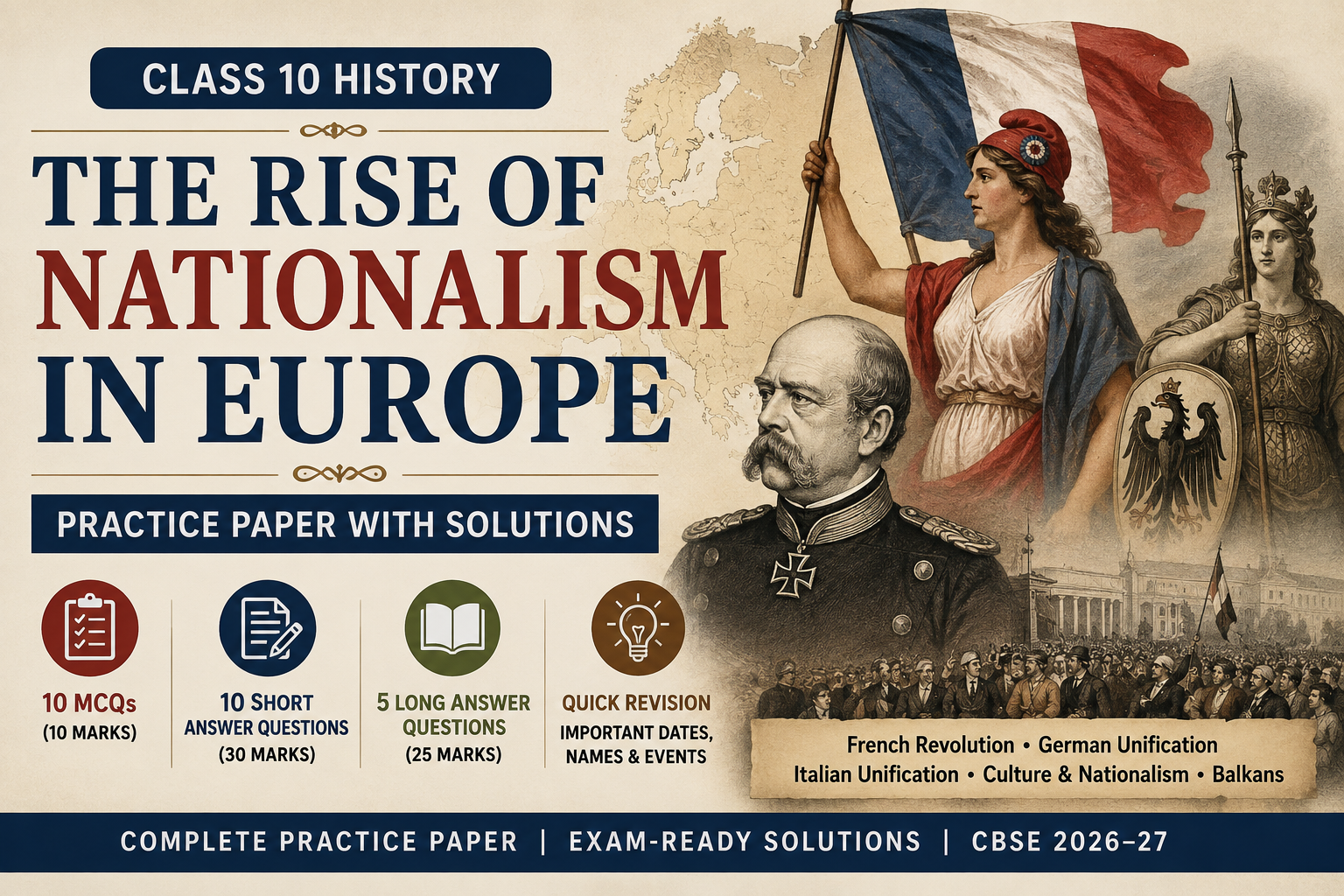
The Rise of Nationalism in Europe Class 10 is an important chapter in CBSE Class 10 History. The chapter explains the development of nationalism in Europe, the emergence of nation-states, the French Revolution, German and Italian unification, the role of culture and Romanticism, and the growth of nationalist tensions in the Balkans.
This Class 10 History Chapter 1 Practice Paper contains 25 questions divided into three sections: 10 MCQs, 10 short-answer questions and 5 long-answer questions. The paper is designed in a CBSE-style format for Session 2026–27 and includes factual, conceptual, analytical, source-based and competency-oriented questions.
The solutions are provided at the end of each section, allowing students to attempt the questions first and then check their answers. The MCQs include explanations, while the short- and long-answer solutions are presented in an exam-ready, point-wise format.
The Rise of Nationalism in Europe Class 10 is an important chapter for students preparing for the CBSE Class 10 History examination. This The Rise of Nationalism in Europe Class 10 practice paper covers important concepts, events, personalities and developments from the chapter.
Class: 10
Subject: Social Science – History
Chapter: The Rise of Nationalism in Europe
Session: 2026–27
Total Questions: 25
Suggested Time: 2 Hours
Maximum Marks: 65Preparing for your CBSE Class 10 examinations? Along with practising History questions, students can also explore our Class 10 Tuition Classes for structured guidance, concept-based learning, regular practice and exam preparation.
SECTION A – MULTIPLE CHOICE QUESTIONS
10 × 1 = 10 Marks
This The Rise of Nationalism in Europe Class 10 practice section contains 10 MCQs designed to test your understanding of the key concepts covered in the chapter.
Q1. Which of the following best explains Frédéric Sorrieu’s vision in his 1848 print?
A. A Europe dominated by hereditary monarchies
B. A world of democratic and social republics
C. A Europe divided into feudal territories
D. A world ruled by a single emperor
Q2. Which measure of the French Revolution most directly helped create a sense of collective national identity?
A. Restoration of the Bourbon monarchy
B. Introduction of internal customs duties
C. Adoption of the tricolour flag and the ideas of la patrie and le citoyen
D. Expansion of aristocratic privileges
Q3. The Napoleonic Code of 1804 is significant because it:
A. restored privileges based on birth
B. established equality before the law and secured the right to property
C. abolished private property
D. introduced universal suffrage for women
Q4. Consider the following statements about liberal nationalism in nineteenth-century Europe:
I. It stood for individual freedom and equality before law.
II. It necessarily meant universal adult suffrage.
III. It supported representative government and constitutionalism.
Which of the statements given above is/are correct?
A. I and II only
B. II and III only
C. I and III only
D. I, II and III
Q5. Match the following and choose the correct option:
A. Giuseppe Mazzini — 1. Young Italy
B. Friedrich List — 2. Zollverein
C. Duke Metternich — 3. Congress of Vienna
D. Otto von Bismarck — 4. German unification
A. A-1, B-2, C-3, D-4
B. A-2, B-1, C-4, D-3
C. A-3, B-4, C-2, D-1
D. A-4, B-3, C-1, D-2
Q6. Assertion (A): The Zollverein strengthened nationalist sentiments in the German states.
Reason (R): It abolished tariff barriers among participating states and facilitated economic exchange.
Choose the correct option:
A. Both A and R are true, and R is the correct explanation of A.
B. Both A and R are true, but R is not the correct explanation of A.
C. A is true, but R is false.
D. A is false, but R is true.
Q7. The Frankfurt Parliament of 1848 was convened in the:
A. Palace of Versailles
B. Church of St Paul
C. Palace of Vienna
D. Bastille
Q8. Which development most clearly shows that nationalism in Germany after 1848 moved away from its earlier liberal-democratic character?
A. Formation of Young Europe
B. Leadership of unification by Prussia under Bismarck with the army and bureaucracy
C. Greek struggle for independence
D. Growth of Romantic poetry
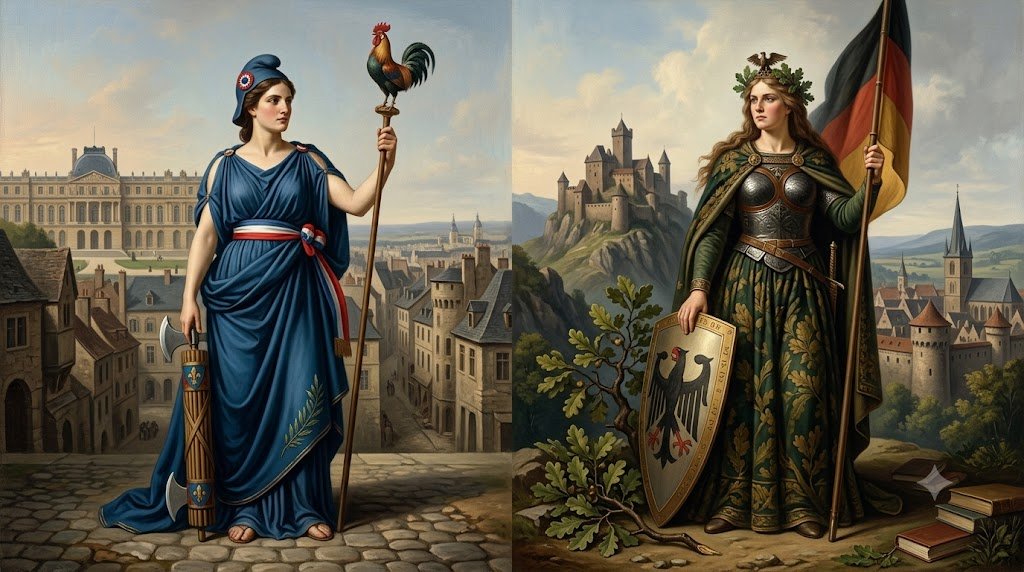
Q9. Marianne and Germania were created as:
A. political parties
B. female allegories of the French and German nations
C. military commanders
D. secret revolutionary societies
Q10. Which combination best explains the emergence of nationalist tensions in the Balkans?
A. Industrialisation alone and the rise of factory towns
B. Disintegration of the Ottoman Empire, competing nationalities and rivalry among European powers
C. The Congress of Vienna alone
D. The spread of liberalism only in Britain
ANSWERS & EXPLANATIONS – SECTION A
Q1. Answer: B — A world of democratic and social republics
Explanation: Frédéric Sorrieu’s 1848 series visualised a utopian world in which the peoples of Europe and America marched as distinct nations towards the Statue of Liberty. It represented democratic and social republics rather than monarchies or a single empire.
Q2. Answer: C — Adoption of the tricolour flag and the ideas of la patrie and le citoyen
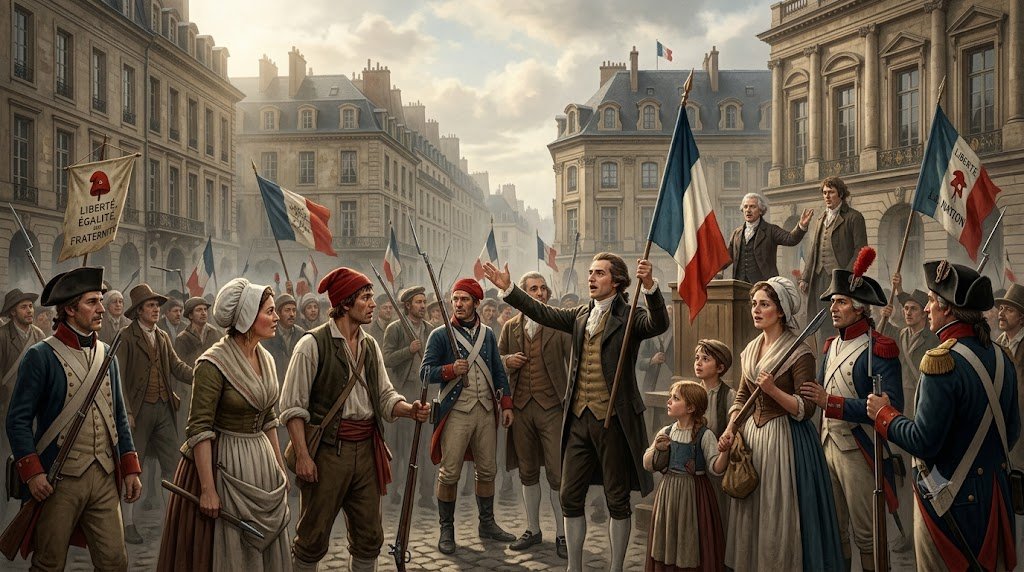
Explanation: The French revolutionaries replaced the royal standard with the tricolour flag and promoted the ideas of la patrie (fatherland) and le citoyen (citizen). Uniform laws, weights and measures and French as a common language also helped create collective identity.
Q3. Answer: B — It established equality before the law and secured the right to property
Explanation: The Civil Code of 1804, known as the Napoleonic Code, abolished privileges based on birth, established equality before the law and protected the right to property.
Q4. Answer: C — I and III only
Explanation: Liberalism stood for individual freedom, equality before the law, constitutional government and representative institutions. However, equality before law did not automatically mean universal suffrage. Women and non-propertied men were often excluded from political rights.
Q5. Answer: A — A-1, B-2, C-3, D-4
Explanation: Mazzini founded Young Italy; Friedrich List supported the economic role of the Zollverein; Duke Metternich was associated with the Congress of Vienna; and Bismarck led the Prussian-driven unification of Germany.
Q6. Answer: A — Both A and R are true, and R is the correct explanation of A
Explanation: The Zollverein removed tariff barriers and reduced the number of currencies among participating German states. Easier economic exchange helped strengthen the feeling of German national unity.
Q7. Answer: B — Church of St Paul
Explanation: The Frankfurt Parliament met in the Church of St Paul on 18 May 1848. The elected representatives attempted to create a constitution for a united German nation.
Q8. Answer: B — Leadership of unification by Prussia under Bismarck with the army and bureaucracy
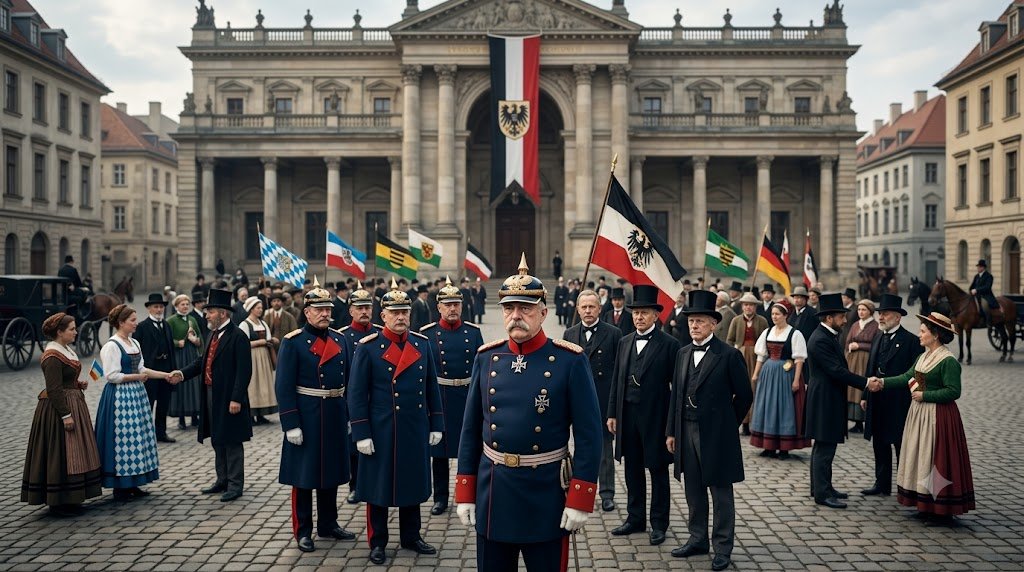
Explanation: After the failure of the liberal attempt of 1848, German unification was achieved under Prussian leadership. Bismarck used the Prussian army and bureaucracy and fought three wars against Denmark, Austria and France.
Q9. Answer: B — Female allegories of the French and German nations
Explanation: Marianne represented the French nation, while Germania represented the German nation. These female allegories gave the abstract idea of the nation a concrete visual form.
Q10. Answer: B — Disintegration of the Ottoman Empire, competing nationalities and rivalry among European powers
Explanation: The weakening of the Ottoman Empire created a power vacuum. Balkan nationalities sought independence, while rivalries among Balkan states and major European powers made the region highly conflict-prone.
SECTION B – SHORT ANSWER QUESTIONS
10 × 3 = 30 Marks
The following The Rise of Nationalism in Europe Class 10 short-answer questions focus on important concepts that students should prepare for the CBSE examination.
Q11. Explain any three measures adopted by the French revolutionaries to create a sense of collective identity among the French people.
Q12. Why did the Napoleonic reforms initially receive support in some parts of Europe? Also state any two reasons for the later hostility towards French rule.
Q13. Explain the main political and economic ideas associated with liberal nationalism in nineteenth-century Europe.
Q14. Why was the Zollverein important for the development of German nationalism? Give three points.
Q15. Describe the role of Giuseppe Mazzini in the growth of nationalism and the idea of a united Italy.
Q16. How did Romanticism contribute to the development of nationalist feelings in Europe? Give three examples from the chapter.
Q17. Why did the Frankfurt Parliament fail to achieve German unification in 1848? Give three reasons.
Q18. Read the following situation and answer the questions that follow:
In a European region, different communities speak different languages and follow different cultural traditions, while their only common political bond is allegiance to an emperor.
(a) Which empire in the chapter is described in this manner?
(b) Why was it difficult to develop political unity there?
(c) Name one major nationalist demand that emerged among such peoples.
Q19. Explain how Britain became a nation-state through a long-drawn process rather than through a sudden revolution. Mention any three important developments.
Q20. Why did nationalist tensions become intense in the Balkans in the nineteenth century? State any three factors.
ANSWERS – SECTION B
These The Rise of Nationalism in Europe Class 10 MCQ answers include brief explanations to help students understand the concepts behind each correct option.
The The Rise of Nationalism in Europe Class 10 solutions below are written in a clear, point-wise format for effective exam preparation.
Q11. Answer:
- Sovereignty was transferred from the monarchy to a body of French citizens, presenting the people as the nation.
- The ideas of la patrie and le citoyen promoted a united community with equal rights.
- The tricolour flag replaced the royal standard, while hymns, oaths and commemorations promoted national identity.
- Uniform laws, weights and measures were introduced and internal customs duties were abolished.
- French was promoted as the common national language.
Q12. Answer:
Initial support:
- Napoleon introduced equality before law and abolished feudal privileges and serfdom in several territories.
- Guild restrictions were removed and administration and communication were improved.
- Uniform laws, weights and measures benefited peasants, artisans and emerging businessmen.
Later hostility:
4. Increased taxation and censorship created resentment.
5. Forced conscription and lack of genuine political freedom made French rule increasingly unpopular.
Q13. Answer:
- Liberalism supported individual freedom and equality before law.
- It supported government by consent, constitutionalism and representative government through parliament.
- Liberals opposed autocracy and clerical privileges and supported protection of private property.
- Economically, liberalism favoured free markets and removal of restrictions on the movement of goods and capital.
- However, political rights were not automatically universal; women and non-propertied men were often excluded from suffrage.
Q14. Answer:
- The Zollverein was a customs union formed in 1834 at the initiative of Prussia.
- It abolished tariff barriers and reduced the number of currencies, making trade easier.
- It encouraged economic integration, railway development and mobility.
- By linking economic interests, it strengthened German nationalist sentiment and the idea of national unification.
Q15. Answer:
- Mazzini was an Italian revolutionary who opposed monarchy and supported democratic republics.
- He founded Young Italy in Marseilles.
- He also founded Young Europe in Berne.
- He believed nations were the natural units of mankind and wanted Italy to become a unified republic.
- His ideas inspired revolutionary societies and frightened conservative rulers.
Q16. Answer:
- Romanticism emphasised emotions, intuition and shared cultural heritage.
- Johann Gottfried Herder believed that the German spirit could be found among common people through folk songs, poetry and dances.
- The Grimm Brothers collected folktales and worked on the German language, contributing to German national identity.
- In Poland, language, music and dances such as the polonaise and mazurka helped preserve national feeling.
Q17. Answer:
- The Prussian king Friedrich Wilhelm IV rejected the crown offered by the elected parliament.
- The monarchy, aristocracy and military opposed the elected assembly.
- The parliament was dominated by middle-class representatives who failed to retain the support of workers and artisans.
- The assembly eventually faced military intervention and was forced to disband.
Q18. Answer:
(a) The empire was the Habsburg Empire.
(b) Political unity was difficult because the empire contained many regions, languages, ethnic groups and communities with different cultural identities. Their major common political bond was allegiance to the emperor.
(c) Nationalities demanded political rights, autonomy and/or independent nation-states based on nationality.
Q19. Answer:
- Before the eighteenth century, English, Welsh, Scottish and Irish communities had distinct identities.
- The English Parliament became an important instrument in building a nation-state centred on England.
- The Act of Union of 1707 united England and Scotland as the United Kingdom of Great Britain.
- Scotland’s distinctive culture and political institutions were suppressed during the process.
- After the failed Irish revolt of 1798, Ireland was incorporated into the United Kingdom in 1801.
- British symbols such as the Union Jack and English language were promoted.
Q20. Answer:
- The Ottoman Empire was weakening and many of its European subject nationalities sought independence.
- Romantic nationalism encouraged Balkan peoples to define themselves as separate nations.
- Different Balkan states competed for territory.
- Russia, Germany, England and Austria-Hungary competed for influence in the region.
- These overlapping national and imperial rivalries produced repeated conflicts and wars.

SECTION C – LONG ANSWER QUESTIONS
5 × 5 = 25 Marks
These The Rise of Nationalism in Europe Class 10 long-answer questions cover important themes such as the French Revolution, German unification, Italian unification, culture and nationalism, and the Balkans.
Q21. “The French Revolution was the first clear expression of nationalism in Europe.” Examine the statement with reference to the transfer of sovereignty, symbols of collective identity, administrative reforms and the spread of revolutionary ideas.
Q22. Trace the process of German unification from the failure of the liberal initiative in 1848 to the proclamation of the German Empire in 1871. Highlight the roles of Prussia, Otto von Bismarck and the army.
Q23. Describe the process of Italian unification. In your answer, discuss the contributions of Giuseppe Mazzini, Count Camillo de Cavour, Giuseppe Garibaldi and Victor Emmanuel II.
Q24. Explain how culture contributed to the growth of nationalism in Europe. Discuss the role of Romanticism, folk traditions, language, music and allegorical representations such as Marianne and Germania.
Q25. “By the last quarter of the nineteenth century, nationalism had become closely aligned with imperialism.” Explain the statement with special reference to the Balkans and the rivalry among European powers.
ANSWERS – SECTION C
The following The Rise of Nationalism in Europe Class 10 answers are presented in an exam-ready format with important names, events and dates.
Q21. Answer:
The French Revolution of 1789 was the first clear expression of nationalism in Europe.
- Sovereignty was transferred from the absolute monarchy to a body of French citizens, making the people the nation.
- The ideas of la patrie and le citoyen promoted a united community with equal rights under a constitution.
- The tricolour flag replaced the royal standard, while hymns, oaths and commemorations created collective identity.
- A centralised administrative system introduced uniform laws, while internal customs duties were abolished and uniform weights and measures were adopted.
- French was promoted as a common language.
- The revolutionaries declared that the French nation had a mission to liberate European peoples from despotism.
- Revolutionary wars and Jacobin activities helped spread nationalist ideas beyond France.
Q22. Answer:
The process of German unification was completed in 1871.
- In 1848, German middle-class nationalists attempted to unite the German states through the Frankfurt Parliament.
- The parliament drafted a constitution for a German nation headed by a monarchy subject to parliament.
- Friedrich Wilhelm IV, King of Prussia, rejected the crown offered by the elected assembly.
- After the failure of the liberal initiative, Prussia took leadership of German unification.
- Otto von Bismarck used the Prussian army and bureaucracy to achieve unification.
- Three wars against Denmark, Austria and France ended in Prussian victories.
- In January 1871, William I was proclaimed German Emperor at Versailles.
- German unification therefore demonstrated the dominance of Prussian state power rather than the earlier liberal-parliamentary model.
Q23. Answer:
Italy was divided into several states before unification.
- Giuseppe Mazzini promoted the idea of a united Italian republic and founded Young Italy.
- After revolutionary attempts failed, Sardinia-Piedmont under Victor Emmanuel II took the lead.
- Count Camillo de Cavour, the chief minister, used diplomacy and an alliance with France to defeat Austrian forces in 1859.
- Giuseppe Garibaldi led volunteers, including the Red Shirts, into southern Italy and the Kingdom of the Two Sicilies in 1860.
- In 1861, Victor Emmanuel II was proclaimed king of united Italy.
- Venetia was added in 1866.
- The Papal States, including Rome, joined Italy in 1870 after French troops withdrew.
Q24. Answer:
Culture played an important role in the growth of nationalism in Europe.
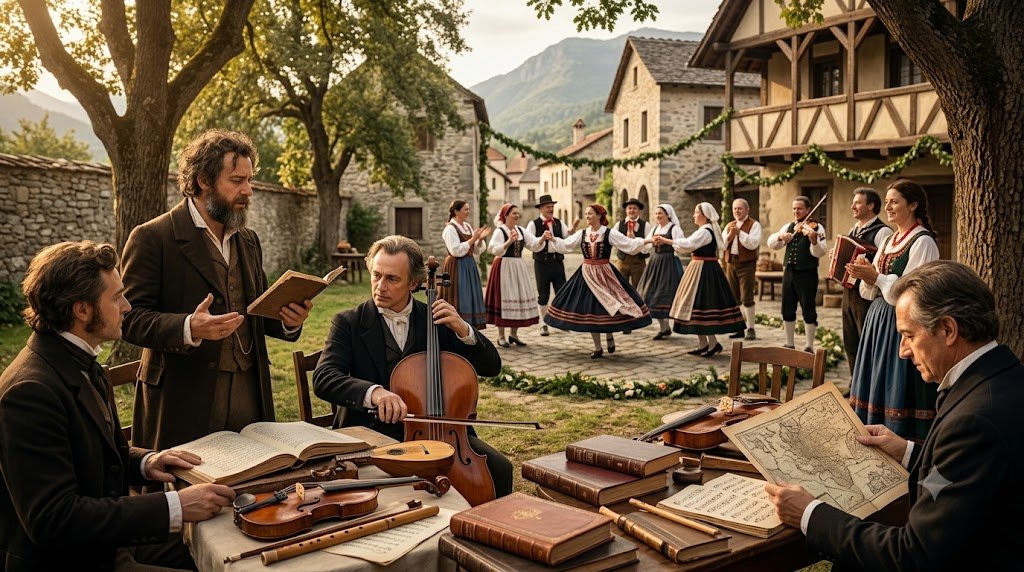
- Romantic artists and poets emphasised emotions, intuition and a shared cultural heritage.
- Herder promoted folk culture such as songs, poetry and dances as expressions of the true spirit of the nation.
- The Grimm Brothers collected folktales and worked on the German language, connecting cultural work with German national identity.
- In Poland, language, music and folk dances such as the polonaise and mazurka kept national feeling alive under foreign domination.
- Literature, folklore and language helped people imagine a common national past.
- Artists used female allegories to give nations a visible identity: Marianne represented France and Germania represented Germany.
- Thus, language, folklore, literature, music, art and symbols helped spread nationalist ideas among wider populations.
Q25. Answer:
By the last quarter of the nineteenth century, nationalism increasingly became aligned with imperialism, especially in the Balkans.
- Nationalism became less closely associated with liberal-democratic ideals and increasingly acquired narrow and competitive aims.
- The weakening and disintegration of the Ottoman Empire encouraged European subject nationalities to seek independence.
- Balkan peoples used nationality and historical memories of earlier independence to justify their political claims.
- Different Balkan states competed with each other for territory.
- The Balkans became an area of rivalry among Russia, Germany, England and Austria-Hungary.
- These powers attempted to extend their own influence and counter their rivals.
- Aggressive nationalism, territorial competition and imperial rivalry led to repeated wars and contributed to the outbreak of the First World War in 1914.
Quick Revision: Important Facts
Use this The Rise of Nationalism in Europe Class 10 quick revision section to revise important dates, personalities and events before your examination.
| Topic | Key Fact |
|---|---|
| French Revolution | 1789 |
| Napoleonic Code | 1804 |
| Zollverein | 1834 |
| Frankfurt Parliament | 1848 |
| Young Italy | Giuseppe Mazzini |
| German Unification | 1871 |
| Marianne | Allegory of France |
| Germania | Allegory of Germany |
| First World War | 1914 |
How to Use This Practice Paper
Step 1: Attempt all 10 MCQs in Section A without looking at the answers.
Step 2: Check your score using the answers and explanations provided at the end of Section A.
Step 3: Write your own answers to all 10 questions in Section B and then compare them with the exam-ready solutions provided below.
Step 4: Practise writing the 5 long-answer questions in Section C in approximately 120 words each.
Step 5: Finally, revise the important dates, names, and events from the Quick Revision section.
Students preparing for the CBSE Class 10 History examination should also stay familiar with the latest curriculum and academic resources. The official CBSE Academic website provides curriculum-related information and examination resources
Frequently Asked Questions
Students preparing The Rise of Nationalism in Europe Class 10 can use these frequently asked questions for quick revision.
1. What is The Rise of Nationalism in Europe Class 10?
It is an important Class 10 History chapter that covers nationalism, the emergence of nation-states, the French Revolution, German and Italian unification, the role of culture, and nationalist tensions in the Balkans.
2. How many questions are included in this practice paper?
This practice paper contains a total of 25 questions: 10 MCQs, 10 short-answer questions, and 5 long-answer questions.
3. How many marks is this practice paper?
This practice paper carries 65 marks: 10 marks for MCQs, 30 marks for short-answer questions, and 25 marks for long-answer questions.
4. Who founded Young Italy?
Giuseppe Mazzini founded Young Italy.
5. What was the Zollverein?
The Zollverein was a customs union formed in 1834 at the initiative of Prussia. It helped remove tariff barriers among German states and promoted economic integration.
6. Where did the Frankfurt Parliament meet?
The Frankfurt Parliament met in the Church of St Paul in 1848.
7. Who led German unification?
German unification was led by Otto von Bismarck under Prussian leadership, using the Prussian army and bureaucracy.
8. What do Marianne and Germania represent?
Marianne represented the French nation, while Germania represented the German nation.
For detailed textbook-based preparation, students should also refer to the official NCERT Class 10 History textbook. It can help students cross-check important concepts, events, dates and personalities covered in The Rise of Nationalism in Europe Class 10.
Conclusion
This The Rise of Nationalism in Europe Class 10 Practice Paper with Solutions has been designed to help students prepare for the CBSE Class 10 History examination 2026–27 in a structured and effective manner. Students can first attempt all the questions in each section independently and then check their answers using the solutions provided at the end of that section.
The MCQ section includes the correct answers along with explanations, while the short-answer and long-answer questions are provided with exam-ready, point-wise solutions. This approach helps students understand the concepts clearly instead of simply memorising answers and also improves their ability to write well-structured answers in the examination.
For the best results, attempt the complete practice paper without looking at the solutions first. After completing the paper, compare your answers with the provided solutions, identify your mistakes, and revise the relevant concepts from The Rise of Nationalism in Europe.
Students who want to understand the broader historical meaning of nationalism can also explore this nationalism reference resource for additional background reading.
1 thought on “The Rise of Nationalism in Europe Class 10: CBSE Practice Paper 2026-27 with Solutions”