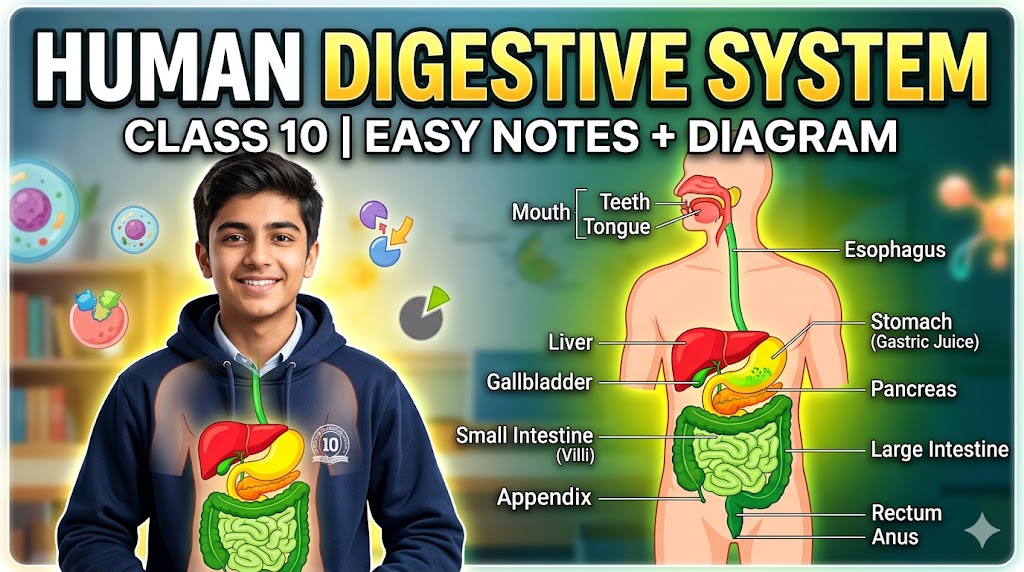
Human Digestive System Bio Class 10 is one of the most important chapters in CBSE Science. In this chapter, we learn about the digestive organs, process of digestion and absorption of food in humans with a labeled diagram.
The digestive system is a complex process that is key to our health. On average, we eat about 1.5 tons of food every year.
Human Digestive System Bio Class 10 is one of the most important chapters in CBSE Science. Understanding the Human Digestive System Bio Class 10 helps students learn how food is digested and absorbed in the body.

A labeled diagram of the digestive system helps us understand it better. It shows us the different parts and what they do.
To understand digestion better, you should also read
👉 Life Processes Class 10 Notes
Key Takeaways
In Human Digestive System Bio Class 10, key points include digestion, absorption, and assimilation. Learning Human Digestive System Bio Class 10 helps in scoring high marks in board exams.
- The digestive system is vital for breaking down food into nutrients.
- A labeled diagram aids in understanding the digestive system’s complexity.
- The digestive process involves multiple organs working in harmony.
- Understanding the digestive system is key to appreciating its importance in overall health.
- A clear grasp of the digestive system can lead to better health choices.
The Human Digestive System Bio Class 10 explains the structure and functions of different digestive organs. In Human Digestive System Bio Class 10, students also study enzymes and the process of digestion in detail.
The Fundamentals of Human Digestion
Digestion in humans is a complex process. It involves many organs and enzymes working together. This process breaks down food into nutrients that our bodies can use for energy, growth, and repair.
Definition and Purpose of Digestion
Digestion is how our bodies break down food into smaller parts. These parts can then be absorbed and used by our cells. The main goal of digestion is to get essential nutrients like carbs, proteins, and fats from what we eat.
Overview of the Digestive Process
The digestive process starts when we eat and ends when we get rid of waste. It includes several stages: eating, mechanical digestion, chemical digestion, absorption, and elimination.
| Stage | Description |
|---|---|
| Ingestion | The process of consuming food into the mouth. |
| Mechanical Digestion | The physical breakdown of food into smaller pieces. |
| Chemical Digestion | The breakdown of food into smaller molecules using enzymes. |
| Absorption | The process by which nutrients are absorbed into the bloodstream. |
| Elimination | The removal of waste products from the body. |
The digestive system’s functions are complex and specialized. They ensure our bodies get the nutrients needed to work well.
Human Digestive System Bio Class10: Structure and Organization
It’s important to know how our body breaks down food. The digestive system is complex. It breaks down and absorbs nutrients.
The Alimentary Canal (Digestive Tract)
The alimentary canal, or digestive tract, runs from mouth to anus. It breaks down food into nutrients our body can use. It includes the mouth, esophagus, stomach, small intestine, and large intestine.
Accessory Digestive Organs
There are also organs that help digest food. These are the salivary glands, liver, pancreas, and gallbladder. The salivary glands make saliva to break down carbs. The liver makes bile for fat digestion. The pancreas releases enzymes for proteins, carbs, and fats.

The diagram of Human Digestive System Bio Class 10 is very important for exams. Students should practice drawing the Human Digestive System Bio Class 10 diagram with proper labeling.
Comprehensive Labeled Diagram of the Digestive System
A detailed diagram of the digestive system is very helpful. It shows the mouth, esophagus, stomach, small intestine, large intestine, liver, pancreas, and gallbladder. It helps us understand how they work together.
The human digestive system is made to digest and absorb nutrients well. Knowing its parts and functions helps us appreciate how it keeps us healthy.
The Mouth and Initial Digestion
The digestive process begins in the mouth. Here, food is chewed and mixed with saliva. This stage is key for breaking down food into smaller pieces.
Structure and Components of the Oral Cavity
The mouth has several important parts for food breakdown. These include the lips, cheeks, tongue, and palate. The tongue helps move food around, and the palate is the roof of the mouth.
Types of Teeth and Their Specific Functions
Humans have different teeth for various tasks. Incisors cut food, canines tear it, and molars grind it. This arrangement helps with efficient food breakdown.
Types of Teeth and Their Functions:
| Type of Tooth | Function |
|---|---|
| Incisors | Cutting food into smaller pieces |
| Canines | Tearing food |
| Molars | Grinding food into a pulp |
Salivary Glands and Composition of Saliva
Salivary glands make saliva, a key fluid for food digestion. Saliva has enzymes like amylase that break down carbs. It also makes food slippery, making swallowing easier.
Saliva’s role in digestive system processes is vital. It starts carb digestion and helps food go down. This makes it a big part of the functions of digestive system.
The Esophagus and Stomach
Understanding the esophagus and stomach is key to knowing how our body digests food. These parts of the digestive system are essential for breaking down food.
Structure and Function of the Esophagus
The esophagus is a muscular tube that links the throat to the stomach. It moves food down through muscle contractions called peristalsis. The esophagus is covered in mucous membranes to help food slide smoothly.

Anatomy of the Stomach
The stomach is a sac-like organ that holds food and continues digestion. It has layers like the mucosa, submucosa, muscularis, and serosa. The stomach’s lining secretes gastric juice with enzymes and acids to break down food.
- The stomach’s muscular layer churns food to mix it with gastric juices.
- The gastric secretions contain pepsin and hydrochloric acid, key for protein digestion.
Gastric Digestion and Secretions
Gastric digestion breaks down food with gastric juices. The stomach secretes mucus to protect itself from the acidic juices. This process is important for preparing food for the small intestine.
Key aspects of gastric digestion include:
- Protein denaturation by hydrochloric acid.
- Breakdown of proteins into peptides by pepsin.
In conclusion, the esophagus and stomach are critical for the digestive system. They ensure food is moved and broken down before further digestion in the intestines.
Small Intestine: The Primary Site of Digestion
The small intestine is key in our digestive system. It’s where most of our nutrient absorption happens. This makes it essential for our health.
Anatomy of the Small Intestine
The small intestine, or small bowel, is a long, thin tube. It has three main parts: the duodenum, jejunum, and ileum. Its inside is covered with villi, which help absorb nutrients better.
Digestive Enzymes in the Small Intestine
The small intestine makes enzymes to break down carbs, proteins, and fats. These enzymes work with bile from the liver and gallbladder to digest food.
Having these enzymes is vital for nutrient breakdown. This shows how important the digestive system is for our health.
Absorption of Nutrients
The small intestine’s walls are made for nutrient absorption. The villi and microvilli increase the surface area for absorption. This lets nutrients get into the bloodstream.
| Nutrient | Absorption Mechanism | Significance |
|---|---|---|
| Carbohydrates | Broken down into simple sugars and absorbed through the intestinal wall | Provides energy for the body |
| Proteins | Broken down into amino acids and absorbed into the bloodstream | Essential for building and repairing tissues |
| Fats | Emulsified by bile and absorbed into the lymphatic system | Important for energy storage and brain function |
This efficient process shows how the digestive system keeps us healthy and well.
Large Intestine and Elimination
The large intestine is key in the digestive system. It helps with nutrient absorption and waste removal. It works with other parts to keep us healthy.

Structure of the Large Intestine
The large intestine, or colon, is about 1.5 meters long. It has sections like the cecum, colon, rectum, and anus. Its design helps absorb water, store waste, and aid in elimination.
Functions of the Large Intestine
The large intestine’s main jobs are absorbing water and electrolytes. It also stores waste and hosts microbes called gut microbiota. These tasks are vital for staying hydrated and healthy.
The Process of Elimination
Elimination means waste moves from the large intestine to the rectum. Then, it’s expelled through the anus. This happens thanks to peristalsis, muscle contractions that push waste along.
Knowing how the large intestine works is important. It shows how complex digestion is and why keeping our digestive system healthy matters.
Accessory Organs in Digestion
The human digestive system has many accessory organs that are key to its work. These organs help make digestion more efficient.
The Liver and Its Digestive Functions
The liver is a vital organ for digestion. It makes digestive bile, which helps break down fats. This bile is stored in the gallbladder and released into the small intestine.
- Produces bile to emulsify fats
- Detoxifies harmful substances
- Stores glycogen and regulates metabolism
The Pancreas and Pancreatic Secretions
The pancreas is another important organ. It secretes digestive enzymes and hormones. Its pancreatic juice breaks down carbs, proteins, and fats into smaller pieces.
- Secretes digestive enzymes for nutrient breakdown
- Produces hormones like insulin and glucagon to regulate blood sugar levels
The Gallbladder and Role of Bile
The gallbladder stores bile from the liver. It releases bile into the small intestine to help with fat digestion. Bile salts make fats easier for enzymes to digest.

In conclusion, the liver, pancreas, and gallbladder are essential for the digestive system. Their secretions and functions greatly improve digestion. This shows how important the digestive system importance is for our health.
Digestive Enzymes and Their Specific Roles
Digestive enzymes are key to breaking down food into nutrients our body can use. These enzymes are proteins that turn complex food into simpler forms. This makes it easier for our body to absorb what we eat.
Carbohydrate-Digesting Enzymes
Carbohydrate-digesting enzymes like amylase and sucrase turn carbs into simple sugars. Amylase starts this process in the mouth and continues in the small intestine. Sucrase breaks down sucrose into glucose and fructose, which are then absorbed.
Key carbohydrate-digesting enzymes include:
- Amylase: Breaks down starch into maltose
- Sucrase: Converts sucrose into glucose and fructose
- Maltase: Breaks down maltose into glucose
Protein-Digesting Enzymes
Protein-digesting enzymes like pepsin and trypsin turn proteins into amino acids. Pepsin starts this process in the stomach by breaking proteins into smaller pieces. Trypsin, from the pancreas, further breaks these down into amino acids for absorption.
Key protein-digesting enzymes include:
- Pepsin: Initiates protein digestion in the stomach
- Trypsin: Continues protein digestion in the small intestine
- Chymotrypsin: Further breaks down proteins into amino acids
Fat-Digesting Enzymes
Fat-digesting enzymes, such as lipase, break fats into fatty acids and glycerol. Lipase, from the pancreas, works with bile salts to emulsify fats. This makes fats easier to break down into absorbable components.
The role of lipase in fat digestion is vital:
- Lipase breaks down triglycerides into fatty acids and glycerol
In conclusion, digestive enzymes are essential for nutrient breakdown and absorption. Understanding their roles shows how complex and efficient our digestive system is.
Human Digestive System Bio Class 10 is an important topic that helps students understand how food is processed in the body. The concept of Human Digestive System Bio Class 10 is frequently asked in board exams.
Common Disorders of the Digestive System
It’s important to know about common digestive disorders to prevent and treat them. The digestive system is complex and can face many issues. These include infections, inflammations, and structural and functional problems.
Students should revise Human Digestive System Bio Class 10 regularly to understand digestion clearly. Diagrams of Human Digestive System Bio Class 10 also help in quick revision.
Digestive Infections and Inflammations
Digestive infections happen when harmful germs invade the digestive tract. Examples are gastroenteritis and food poisoning. Inflammations, like gastritis and colitis, can come from infections, allergies, or irritants.
Key causes of digestive infections and inflammations:
- Bacterial or viral infections
- Parasitic infestations
- Food allergies or intolerances
- Irritants like spicy or fatty foods
Structural and Functional Disorders
Structural disorders are physical changes in the digestive tract, like diverticulitis or hernias. Functional disorders, like irritable bowel syndrome (IBS), affect how the digestive system works without visible changes.
Examples of structural and functional disorders:
- Diverticulitis
- Hernia
- Irritable Bowel Syndrome (IBS)
- Gastroesophageal Reflux Disease (GERD)
Preventive Measures and Digestive Health
Keeping your digestive system healthy is key to your overall well-being. Preventive steps include eating well, drinking enough water, exercising, and avoiding harmful substances like tobacco and too much alcohol.
Tips for maintaining digestive health:
- Eat a balanced diet rich in fiber
- Stay hydrated
- Exercise regularly
- Avoid smoking and excessive alcohol consumption
For complete preparation, read:
- Control and Coordination: Complete Guide 2026-27
- Ozone Depletion Environmental Issues: A Complete Guide
- Management of Natural Resources Bio Class 10
Conclusion: Human Digestive System Bio Class 10
The human digestive system is complex. It breaks down and absorbs nutrients from our food. This process involves many organs, like the mouth, esophagus, stomach, small intestine, and large intestine.
Learning about the digestive system can be fascinating. It helps us understand how our body works. Knowing about digestive enzymes and the role of organs like the liver and pancreas is key.
By understanding our digestive system, we can make better choices. This knowledge helps us stay healthy and avoid digestive problems. It’s all about taking care of our body.
Overall, Human Digestive System Bio Class 10 is an essential topic for students. A clear understanding of Human Digestive System Bio Class 10 ensures better performance in exams.
For more detailed study, refer to NCERT Official Biology Books.
FAQ: Human Digestive System Bio Class 10
What is the human digestive system?
The human digestive system breaks down food into nutrients. It includes the alimentary canal and accessory organs. Together, they help us digest food.
What are the main functions of the digestive system?
The digestive system’s main jobs are ingestion, mechanical digestion, and chemical digestion. It also absorbs nutrients and eliminates waste. These steps help us use the nutrients from our food.
What is the role of the mouth in the digestive process?
The mouth starts digestion by chewing and breaking down food. It also mixes food with saliva that has enzymes. This makes a food bolus ready to swallow.
How does the stomach contribute to digestion?
The stomach plays a key role in digestion. It breaks down food mechanically and chemically. It secretes juices with enzymes and acids to digest proteins and other nutrients.
What is the significance of the small intestine in nutrient absorption?
The small intestine is where most nutrient absorption happens. Its walls have villi that increase the surface area. This helps nutrients get into the bloodstream.
What are some common disorders of the digestive system?
Digestive system disorders include infections, inflammations, and conditions like IBS and GERD. Eating well and staying healthy can help prevent or manage these issues.
How do accessory organs like the liver and pancreas contribute to digestion?
The liver and pancreas are key to digestion. The liver makes bile for fat digestion. The pancreas secretes enzymes to break down carbs, proteins, and fats.
What is the importance of digestive enzymes in the digestive process?
Digestive enzymes are vital for breaking down nutrients. They turn complex nutrients into smaller molecules. This makes it easier for the body to absorb them.