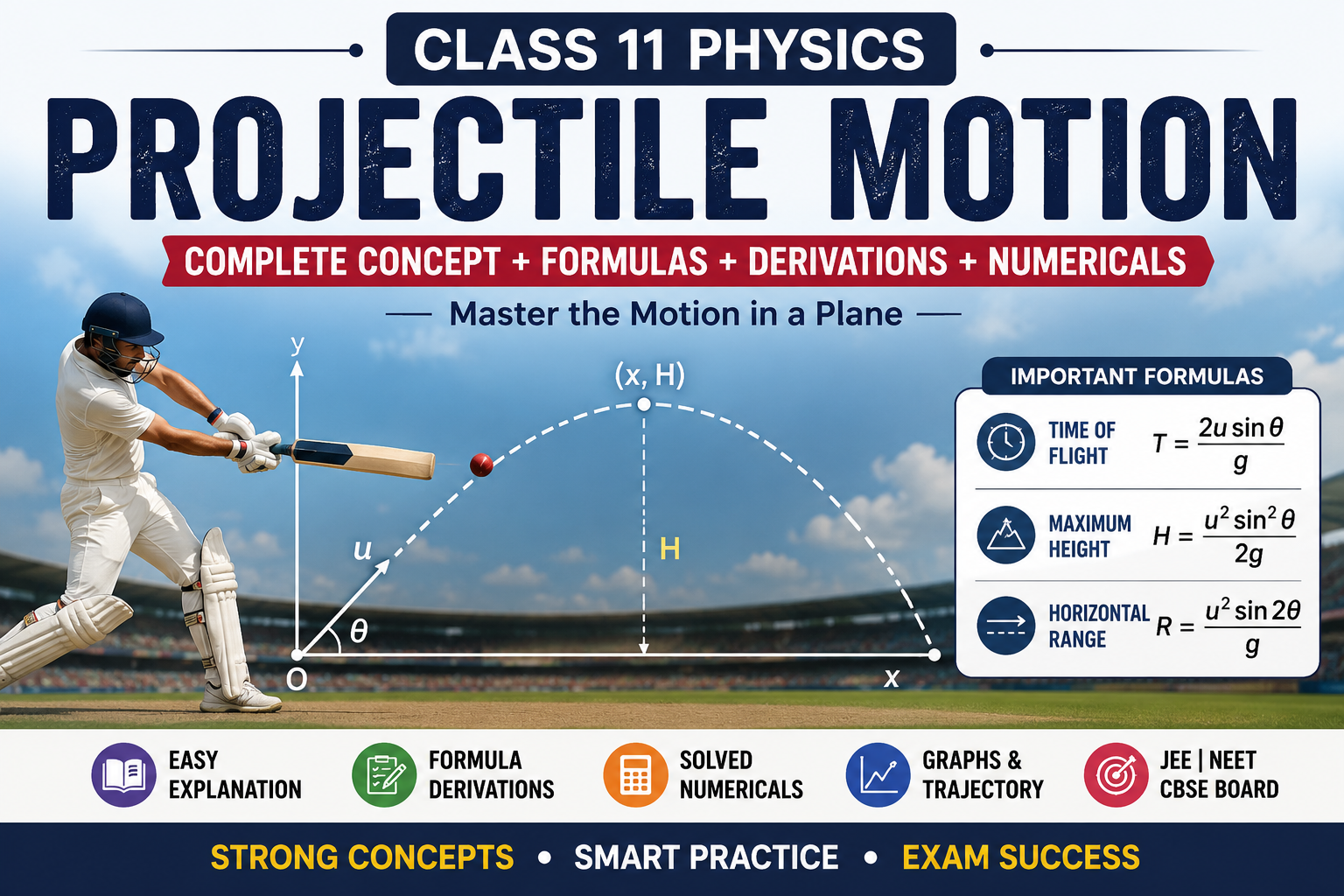
Introduction: Projectile Motion Class 11 Physics
Projectile Motion Class 11 Physics is an important topic for understanding the motion of an object thrown at an angle to the horizontal. It is also an important foundation for solving numerical problems in Class 11 Physics and competitive examinations.
In this complete guide, you will learn the important projectile motion formulas, horizontal and vertical components, time of flight, maximum height, horizontal range, trajectory, important graphs, solved numerical examples and common mistakes in a simple and easy-to-understand way.
Whether you are preparing for CBSE Class 11 Physics, school exams or JEE, this article will help you revise the most important concepts and formulas of projectile motion in one place.
What You Will Learn
- Projectile motion definition and basic concept
- Horizontal and vertical components of velocity
- Important projectile motion formulas
- Time of flight
- Maximum height
- Horizontal range
- Equation of trajectory
- Important graphs
- Solved numerical problems
- Common mistakes students make
- Quick revision formula table
- Important points for exams
If you are looking for a quick and complete revision of Projectile Motion Class 11 Physics, this guide covers the essential concepts and formulas you need to know.
Quick Formula Revision Table: Projectile Motion Class 11 Physics
| Quantity | Formula |
|---|---|
| Horizontal Velocity | u cosθ |
| Vertical Velocity | u sinθ |
| Time of Flight | T = 2u sinθ / g |
| Maximum Height | H = u² sin²θ / 2g |
| Horizontal Range | R = u² sin2θ / g |
What is Projectile Motion?
Projectile motion is the motion of an object thrown into the air under the influence of gravity only.
After projection:
- Gravity acts vertically downward.
- No horizontal force acts on the object (ignoring air resistance).
Therefore:
- Horizontal motion is uniform.
- Vertical motion is accelerated due to gravity.
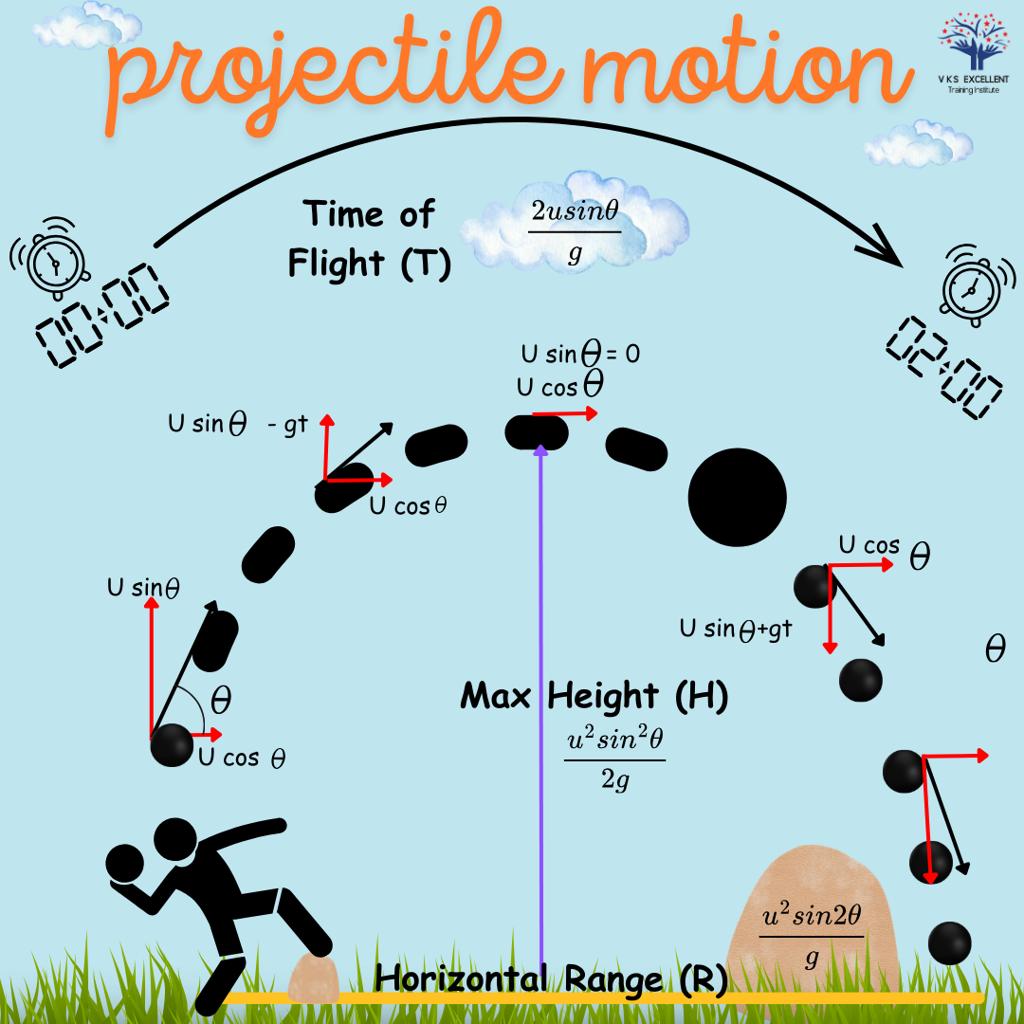
Real-Life Examples of Projectile Motion Class 11 Physics
Projectile motion can be seen everywhere in daily life:
- Cricket ball hit for a six
- Football kicked into the air
- Basketball throw
- Bullet fired from a gun
- Water fountain
- Cannon firing
All these objects move in a curved path called a parabolic path.
Characteristics/ Important Features of Projectile Motion
- Motion takes place in two dimensions.
- Horizontal velocity remains constant.
- Vertical velocity changes continuously.
- Trajectory of projectile is parabola.
- Acceleration due to gravity acts downward.
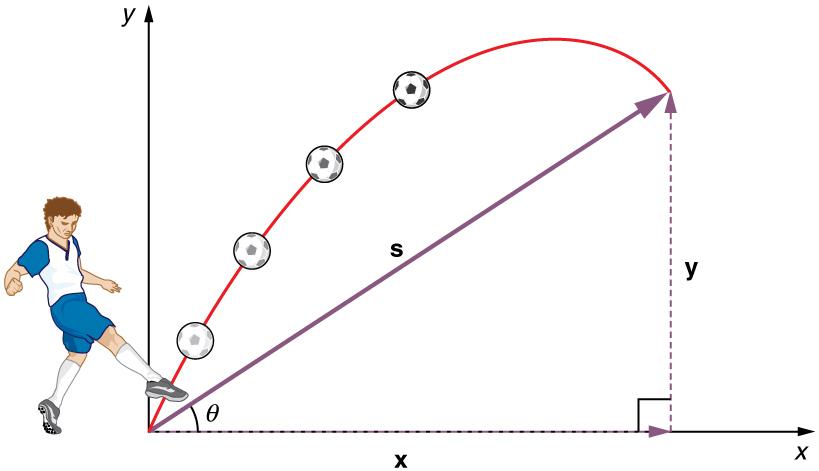
Types of Projectile Motion
Horizontal Projectile
Object is projected horizontally from a height.
Examples:
- Ball rolling off a table
- Bullet fired horizontally
Oblique Projectile
Object is projected at an angle with the horizontal.
Examples:
- Cricket shot
- Football kick
- Basketball throw
Horizontal and Vertical Components of Projectile Motion
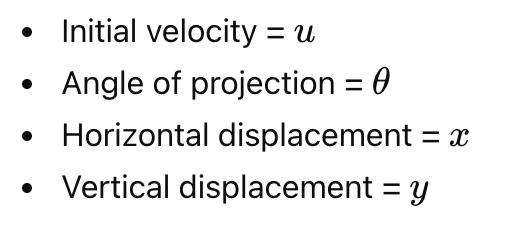
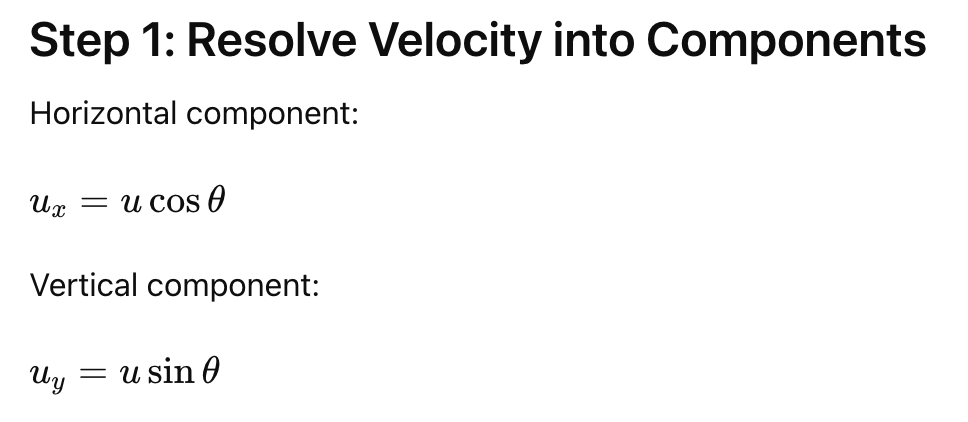
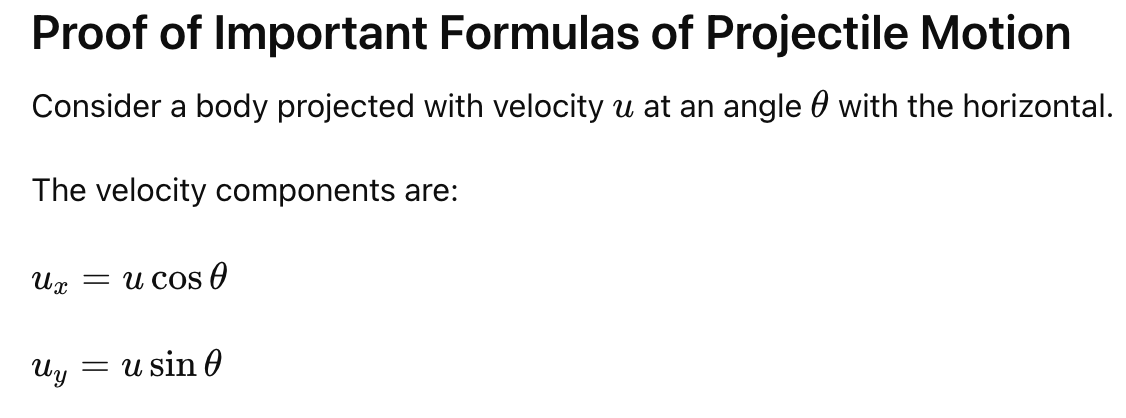
Suppose an object is projected with velocity u at angle θ.
Then the velocity has two components:
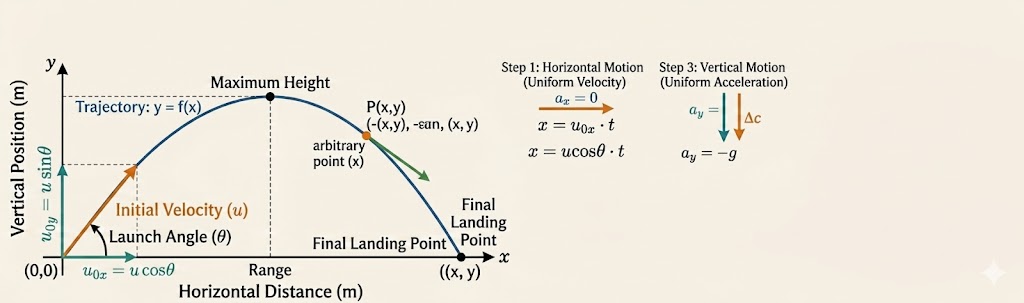
Horizontal Component
ux = u cosθ
Vertical Component
uy = u sinθ
Equations of Projectile Motion
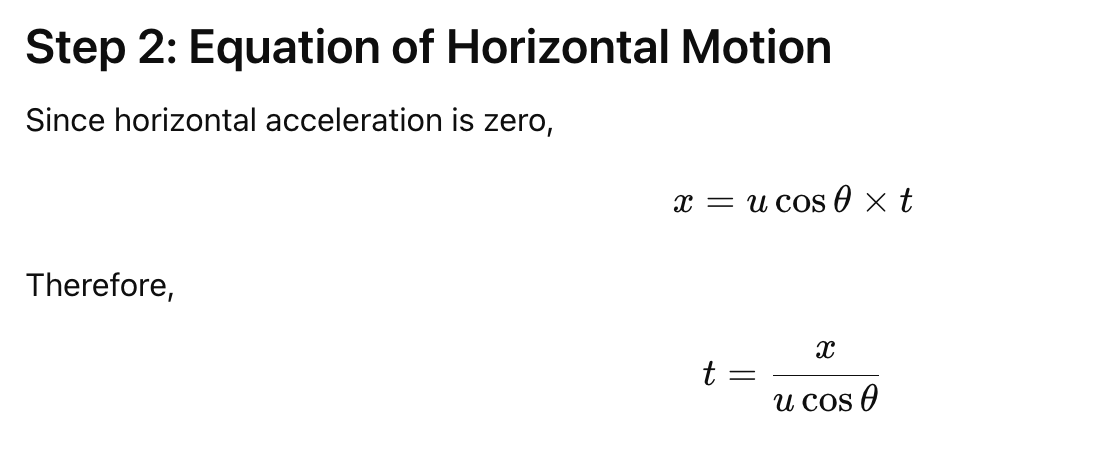
Horizontal Motion
Since acceleration is zero in horizontal direction:
x = u cosθ × t
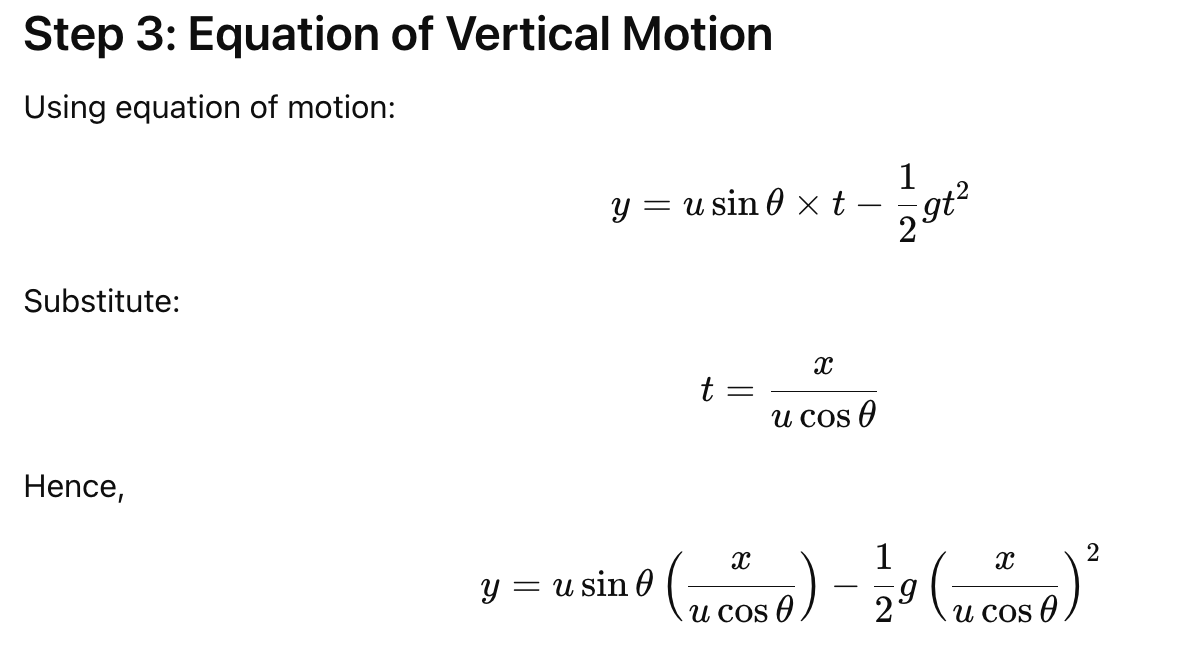
Vertical Motion
Using equation of motion:
y = u sinθ × t − ½gt²
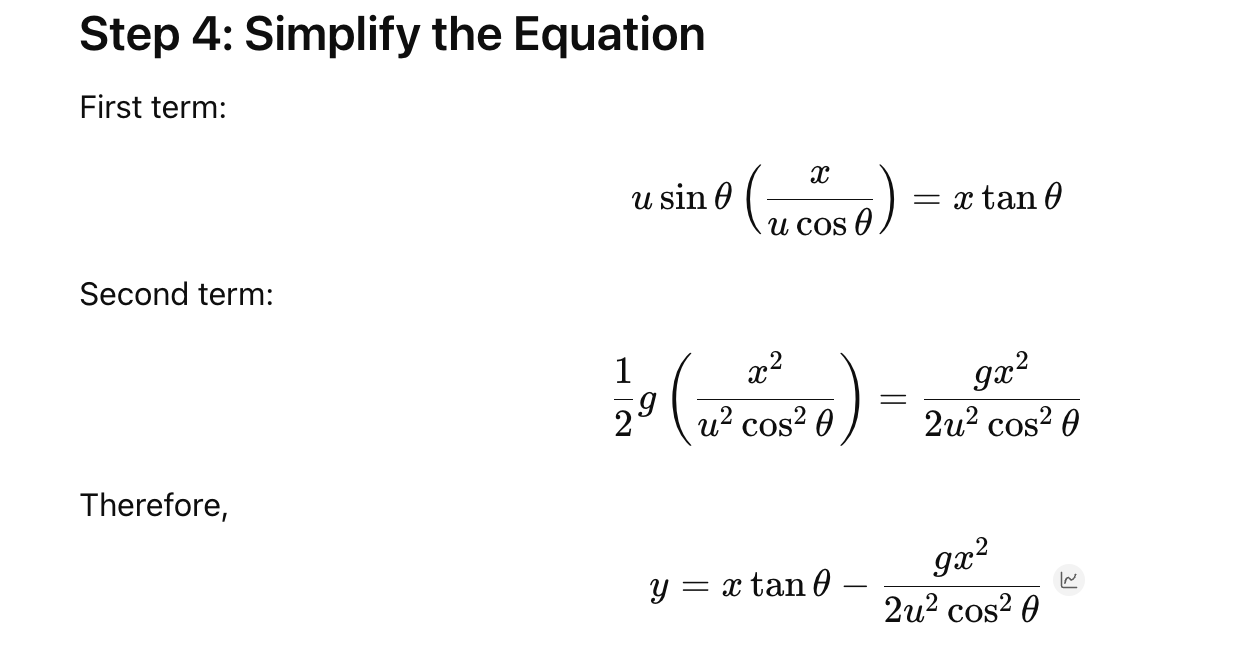
Equation of Trajectory
Eliminating time from horizontal and vertical equations:
y = x tanθ − gx² / (2u² cos²θ)
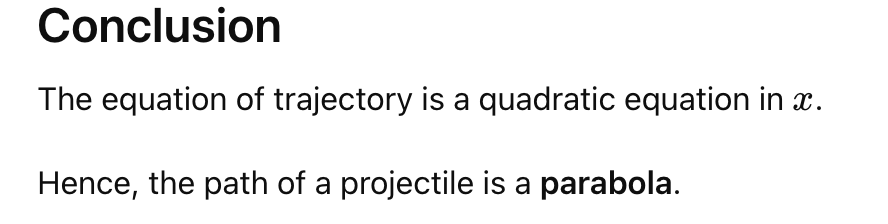
This is the equation of a parabola.
Therefore, the path of projectile motion is parabolic.
Proof of Equation of Trajectory of a Projectile
Important Formulas of Projectile Motion
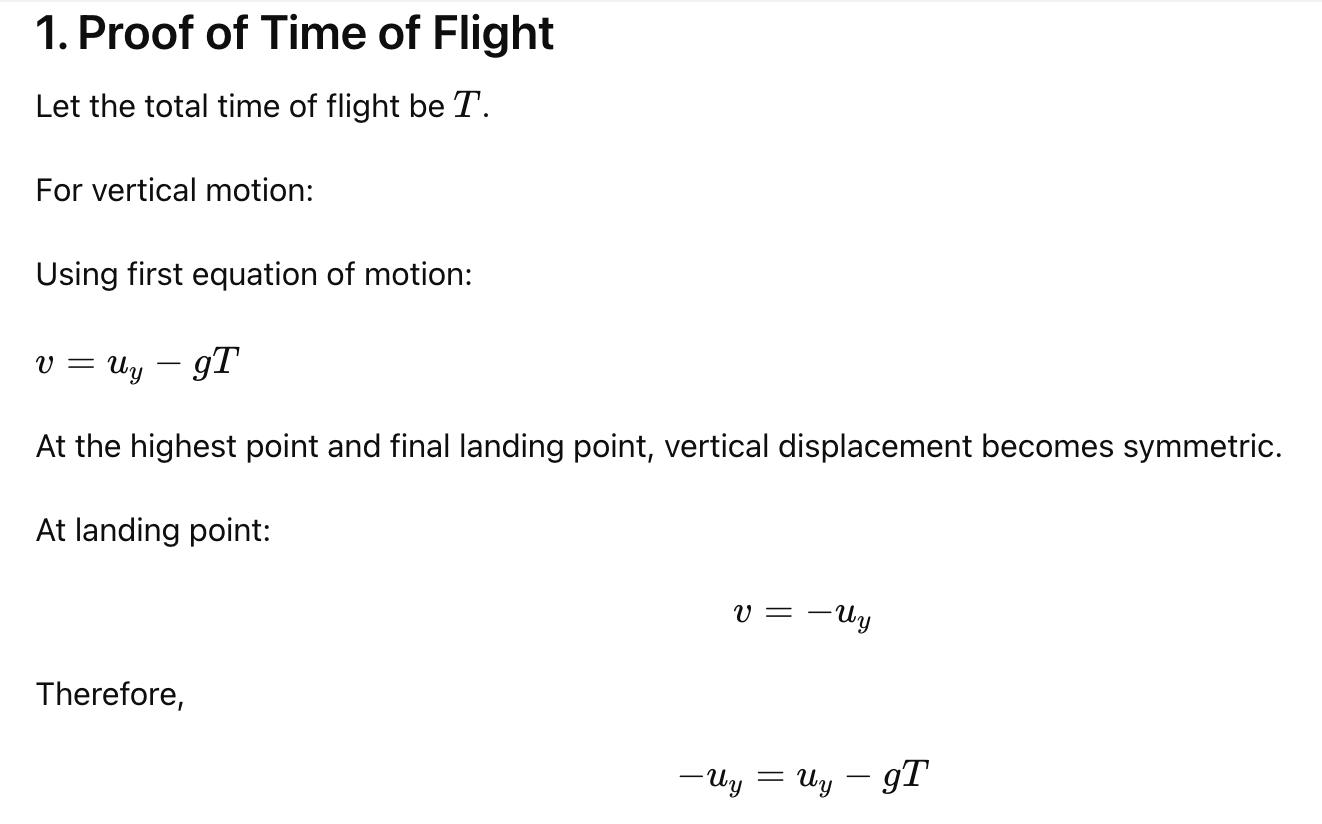
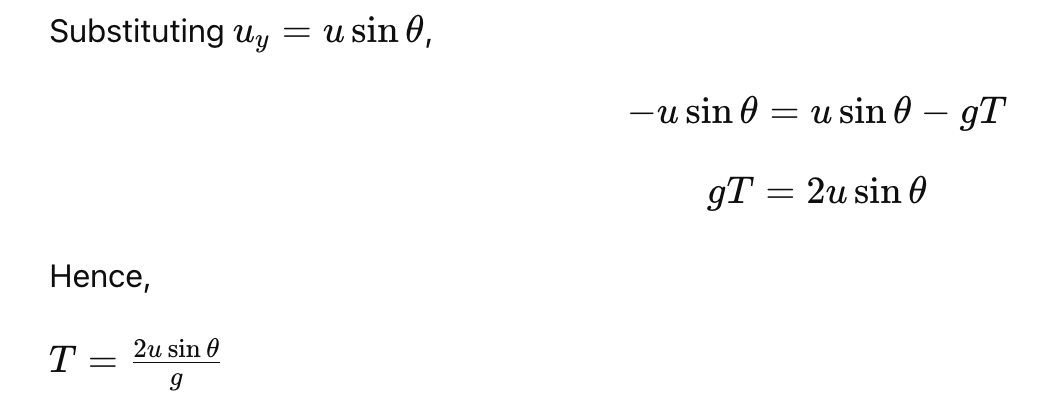
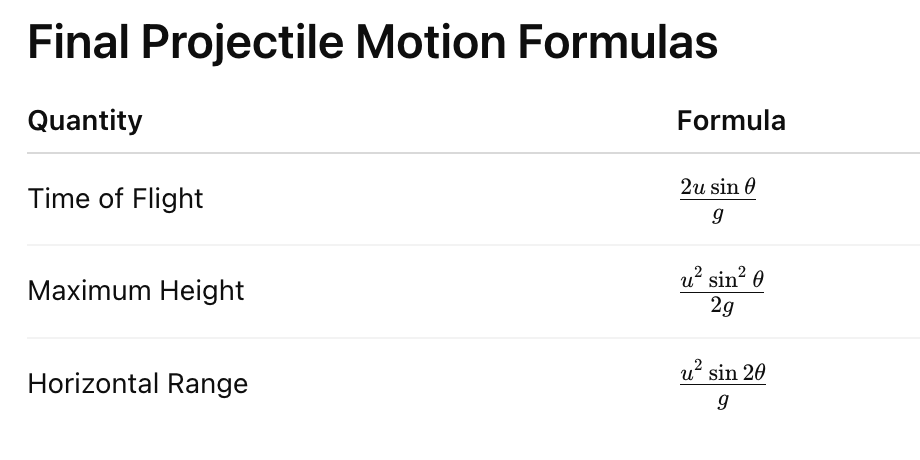
1. Time of Flight Formula
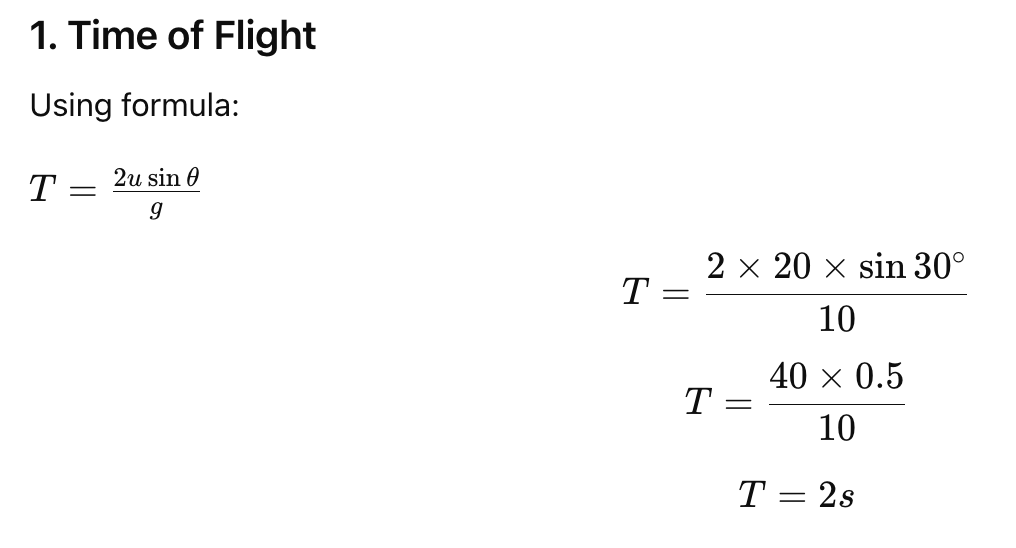
T = 2u sinθ / g
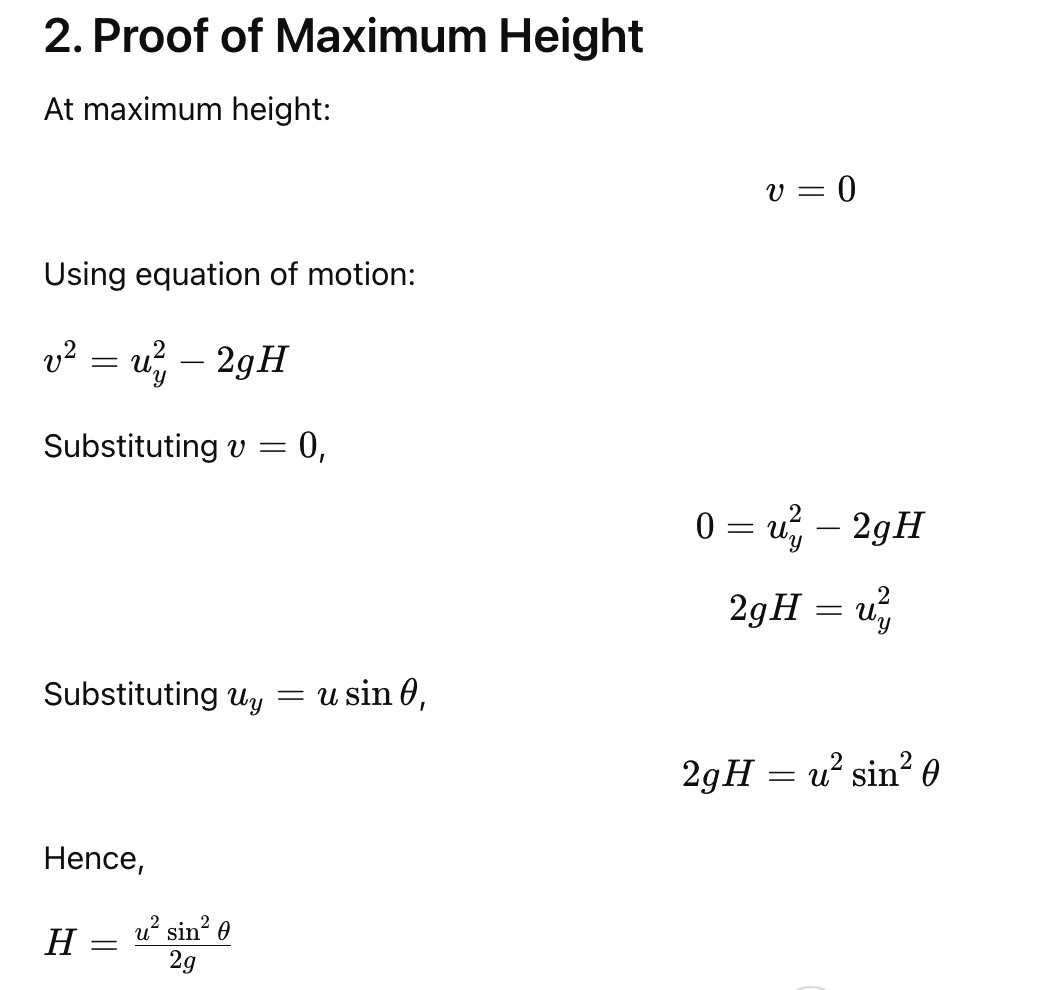
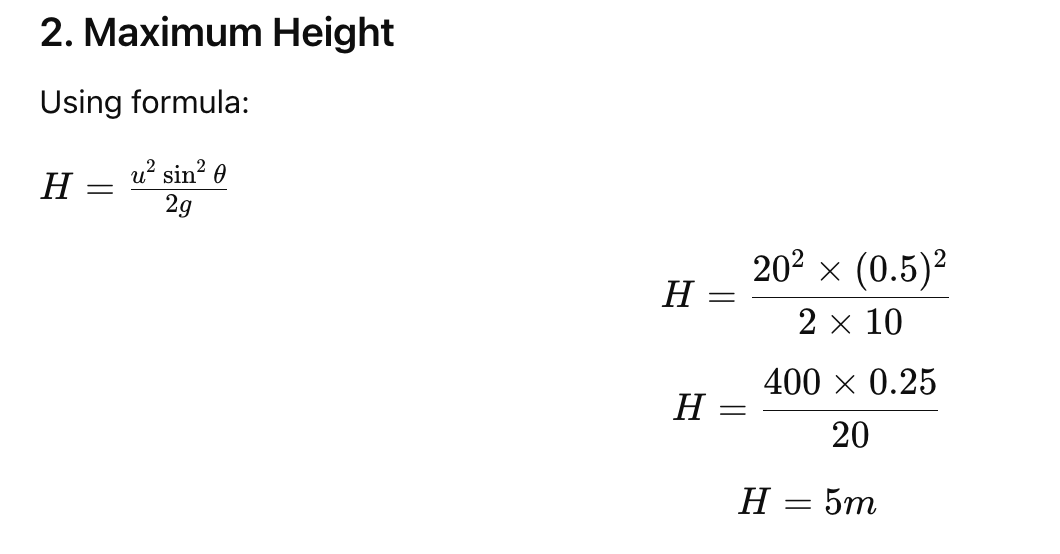
2. Maximum Height Formula
H = u² sin²θ / 2g
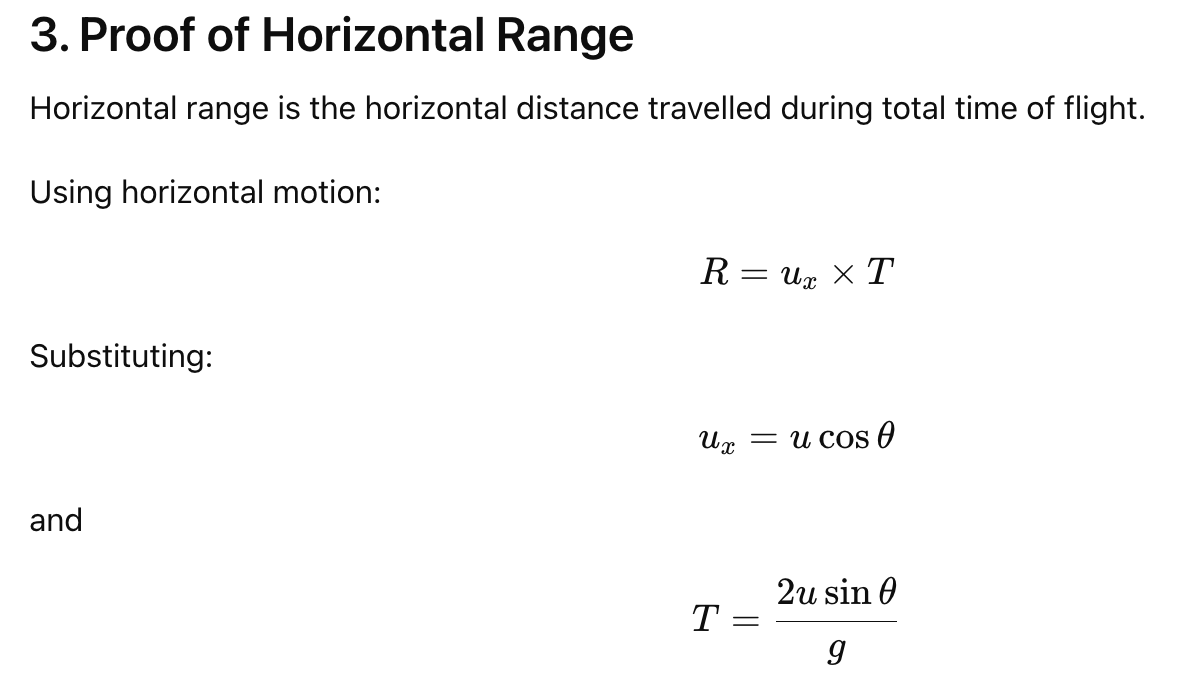
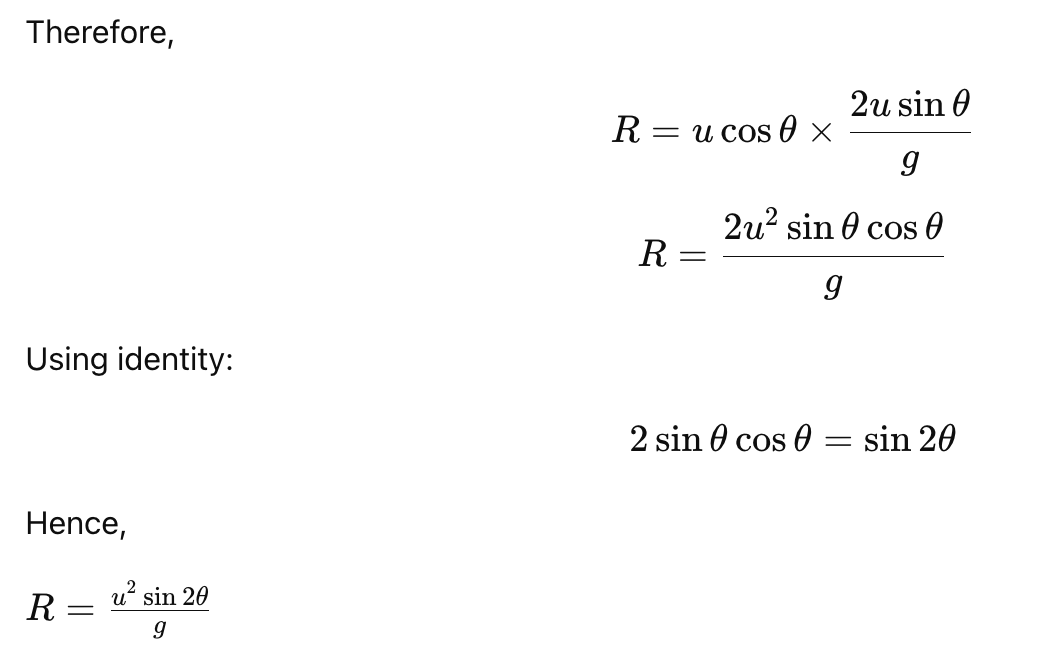
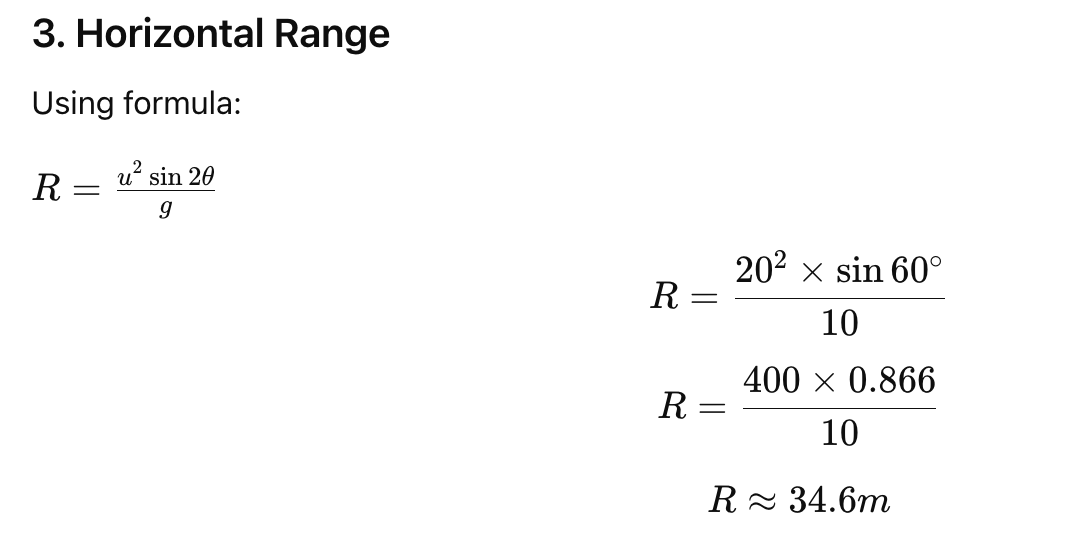
3. Horizontal Range Formula
R = u² sin2θ / g
Proof of Formulae
Why is Range Maximum at 45°?
Range formula:
R = u² sin2θ / g
Maximum value of sin2θ is 1.
2θ = 90°
θ = 45°
Therefore, range is maximum at 45°.
To understand the basics of Motion in a Straight Line, students should also study our Motion in a Straight Line Class 11(2026-27): Key Strategy
Important Conceptual Points: Projectile Motion Class 11 Physics
1. Horizontal and Vertical Motions are Independent
- Gravity affects only vertical motion.
- Horizontal velocity remains constant.
2. Velocity at Highest Point
At highest point:
- Vertical velocity becomes zero.
- Horizontal velocity remains constant.
Therefore, projectile moves horizontally at the top point.
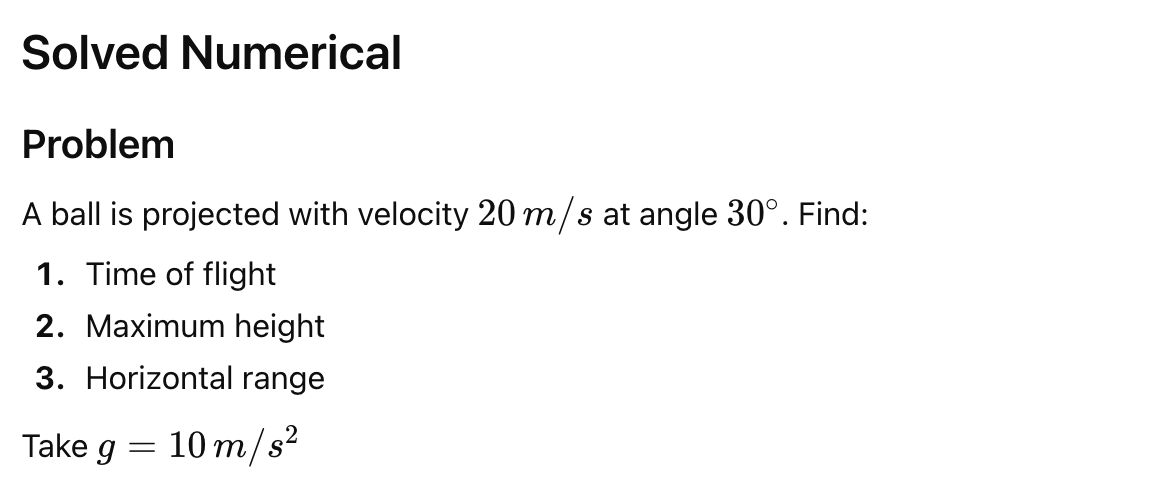
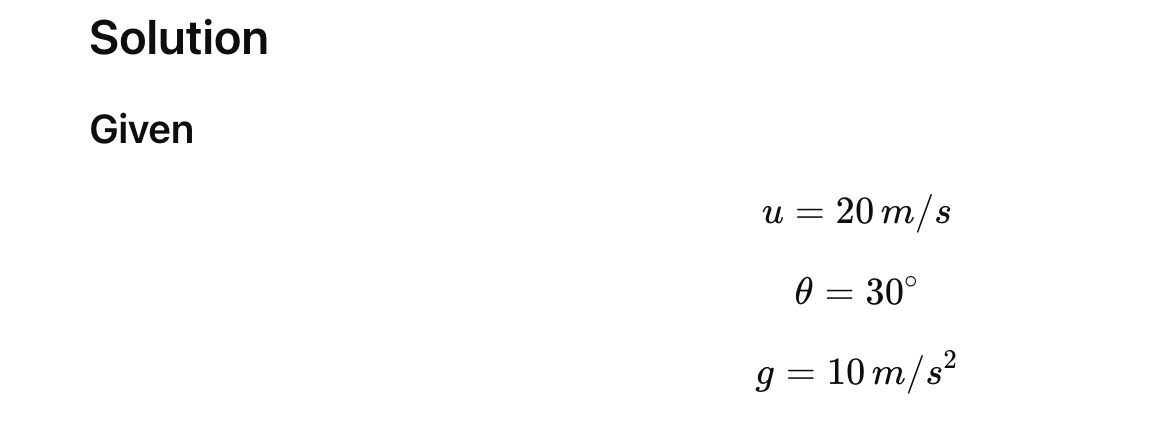
Solved Numerical : Projectile Motion Class 11 Physics
Students preparing for Class 11 Physics should also practice concepts from Heat And Thermodynamics Physics Class 11 (2026-27)
Common Mistakes Students Make in Projectile Motion Class 11 Physics
1. Using sin instead of cos
Students often confuse horizontal and vertical components.
Correct:
- Horizontal → cos
- Vertical → sin
2. Forgetting Gravity Direction
Gravity always acts downward.
3. Wrong Angle in Range Formula
Remember:
- Range uses
4. Mixing Units
Always use SI units.
For a better understanding of Dimensional Formula concepts, read our World of Dimensional Formula Class11: Expert Tips(2026-27)
Important Graphs in Projectile Motion Class 11 Physics
Students should practice:
- Trajectory graph
- Velocity-time graph
- Height-time graph
- Range-angle graph
These are frequently asked in board and competitive exams.
Memory Tricks for Projectile Motion Formulas: Projectile Motion Class 11 Physics
Easy Trick 1
Horizontal Motion = Uniform Motion
Vertical Motion = Free Fall Motion
Easy Trick 2
At highest point:
- Vertical velocity = 0
Important Points for CBSE and JEE: Projectile Motion Class 11 Physics
CBSE Board Exams
Most important topics:
- Time of flight
- Maximum height
- Horizontal range
- Derivations
- Numericals
JEE & NEET
Focus on:
- Conceptual questions
- Relative projectile motion
- Graph-based questions
- Formula applications
Students preparing for CBSE board exams should also check updates from CBSE Official Website