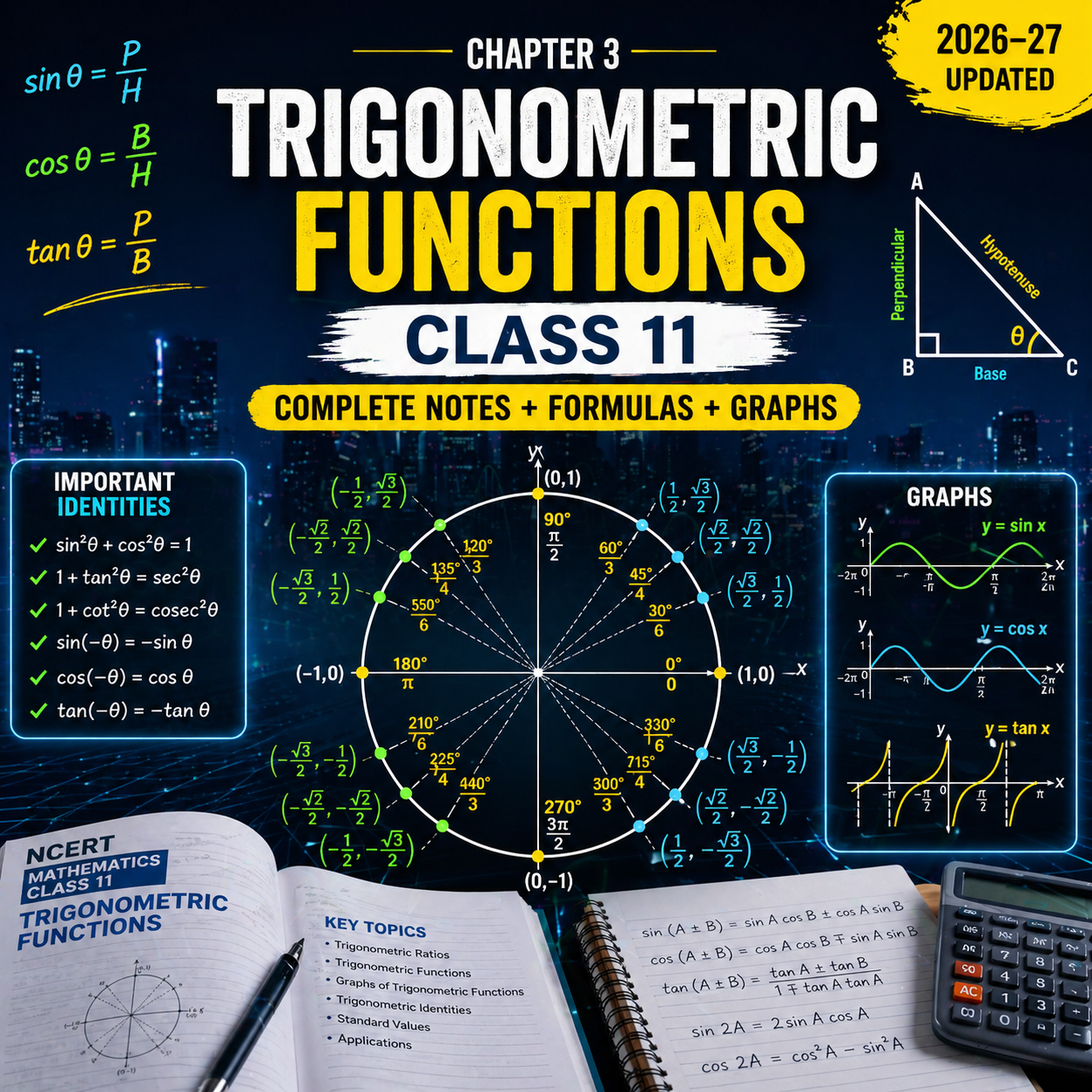
🔰 Introduction to Trigonometric Functions
Trigonometric Functions Class 11 is one of the most important chapters in mathematics that introduces the relationship between angles and sides of a triangle. Trigonometry mainly deals with six fundamental functions—sine (sin), cosine (cos), tangent (tan), cosecant (cosec), secant (sec), and cotangent (cot). These functions help us understand how angles influence distances and positions in both theoretical and real-world situations.
In real life, trigonometry is widely used in calculating heights and distances, such as finding the height of a building or the distance of a ship from the shore. It also plays a crucial role in physics, especially in wave motion, sound, light, and oscillations. Engineers, architects, and even astronomers rely on trigonometric concepts for precise calculations.
For students preparing for CBSE board exams, JEE, or other competitive exams, Trigonometric Functions Class 11 forms the foundation for advanced topics like calculus, vectors, and coordinate geometry. A strong understanding of this chapter not only improves problem-solving skills but also boosts overall mathematical confidence.
trigonometric functions class 11 is one of the most important chapters in NCERT Mathematics, covering formulas, graphs, identities, and problem-solving techniques.

📐 2. Angles and Their Measurement
🔹 Degree Measure vs Radian Measure
In Trigonometric Functions Class 11, angles can be measured in two systems:
- Degree Measure (°): A full circle is divided into 360 equal parts, so one complete revolution = 360°.
- Radian Measure (rad): A full circle is equal to 2π radians, based on the radius of the circle.
Key Relation:
π radians = 180°
🔄 Conversion Formula
- Degrees to Radians:
Radians = (π / 180°) × Degrees
- Radians to Degrees:
Degrees = (180° / π) × Radians
Example 2: Convert π/2 radians into degrees
π/2 = (180 / π) × (π / 2) = 90°
➕ Positive and ➖ Negative Angles
- Positive Angles:
Measured in anticlockwise direction
Example: +90°, +π/2
- Negative Angles:
Measured in clockwise direction
Example: -45°, -π/4
📌 Concept Clarity
If rotation starts from the positive x-axis:
- Anticlockwise → Positive angle
- Clockwise → Negative angle
Example:
- +180° → Half turn anticlockwise
- -180° → Half turn clockwise
Both reach the same final position but follow different directions.
In trigonometric functions class 11, understanding the unit circle helps you visualize values of sin, cos, and tan.
The graphs in trigonometric functions class 11 are essential for exams and concept clarity.

🔄 3. Trigonometric Functions (Basic Definitions)
In Trigonometric Functions Class 11, we study six basic trigonometric functions that relate the angles of a triangle to the ratios of its sides. These functions are fundamental for solving problems in mathematics, physics, and engineering.
📐 Six Trigonometric Functions
- sin θ (Sine)
- cos θ (Cosine)
- tan θ (Tangent)
- cosec θ (Cosecant)
- sec θ (Secant)
- cot θ (Cotangent)
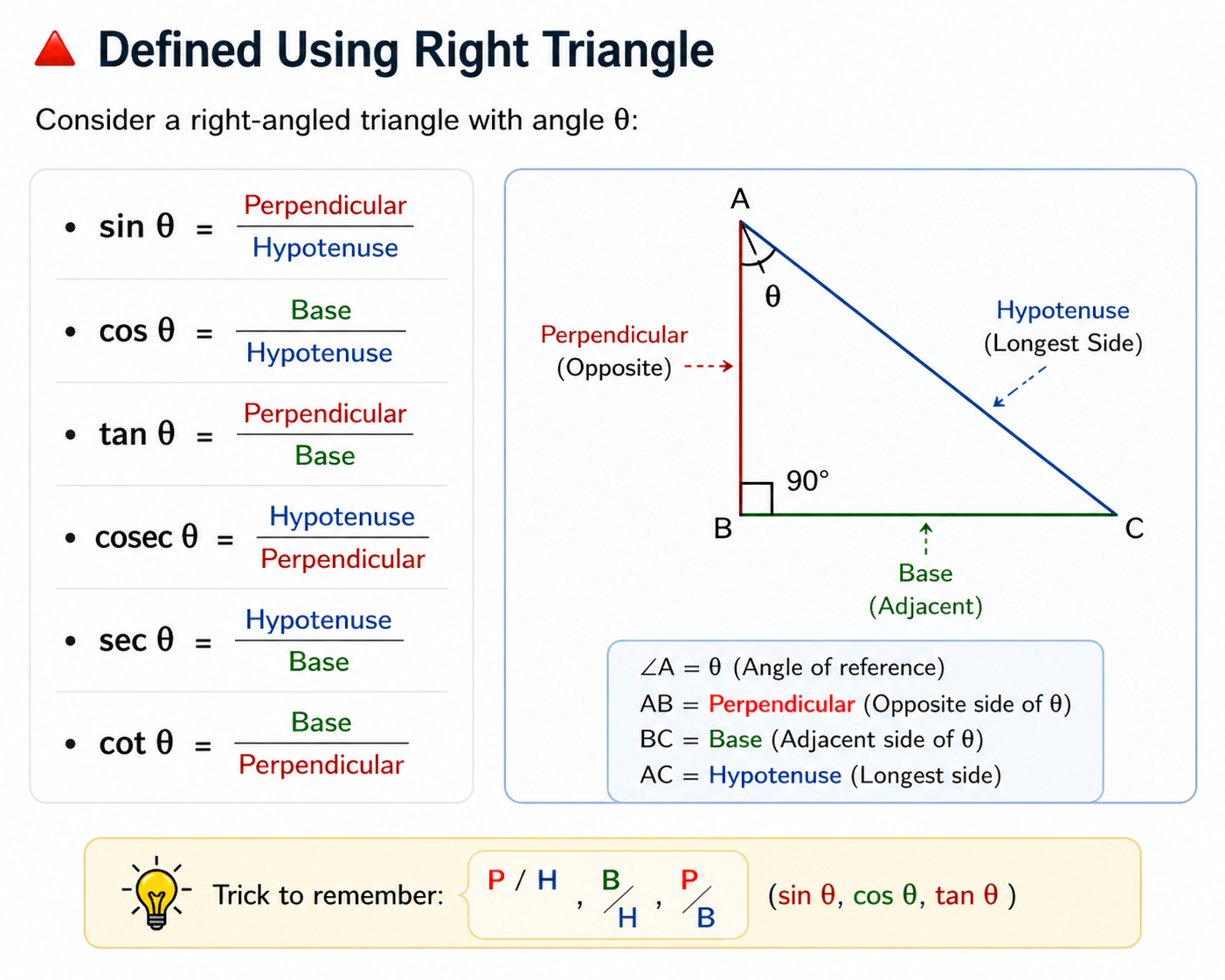
- sin θ = Perpendicular / Hypotenuse
- cos θ = Base / Hypotenuse
- tan θ = Perpendicular / Base
- cosec θ = Hypotenuse / Perpendicular
- sec θ = Hypotenuse / Base
- cot θ = Base / Perpendicular
⭕ Unit Circle Introduction
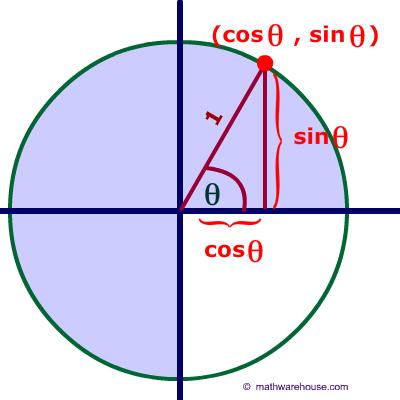
A unit circle is a circle with:
- Radius = 1
- Center at O(0, 0)
📌 Key Concept
If a point P lies on the unit circle making an angle θ with the positive x-axis, then:
This means:
- cos θ = x-coordinate
- sin θ = y-coordinate
📌 Why Unit Circle is Important?
- Defines trigonometric functions for all angles
- Works for positive and negative angles
- Helps in understanding graphs and identities
Right triangle definitions are useful for basic understanding, but the unit circle concept is essential for advanced topics like trigonometric equations and graphs in Trigonometric Functions Class 11.

🔵 4. Trigonometric Functions on Unit Circle
In Trigonometric Functions Class 11, the unit circle helps us find the values of trigonometric functions for standard angles.
Every point on the unit circle is represented as:
This means:
- cos θ = x-coordinate
- sin θ = y-coordinate
📍 Coordinates of Standard Angles
| Angle | Coordinates (cos θ, sin θ) | sin θ | cos θ | tan θ |
|---|---|---|---|---|
| 0° | (1, 0) | 0 | 1 | 0 |
| 30° | (√3/2, 1/2) | 1/2 | √3/2 | 1/√3 |
| 45° | (1/√2, 1/√2) | 1/√2 | 1/√2 | 1 |
| 60° | (1/2, √3/2) | √3/2 | 1/2 | √3 |
| 90° | (0, 1) | 1 | 0 | Not Defined |
📌 Important Observations
- As angle increases, sin θ increases and cos θ decreases
- tan θ = sin θ / cos θ
- tan 90° is not defined because cos 90° = 0
5. Graphs of Trigonometric Functions
🔵 Graph of sin x
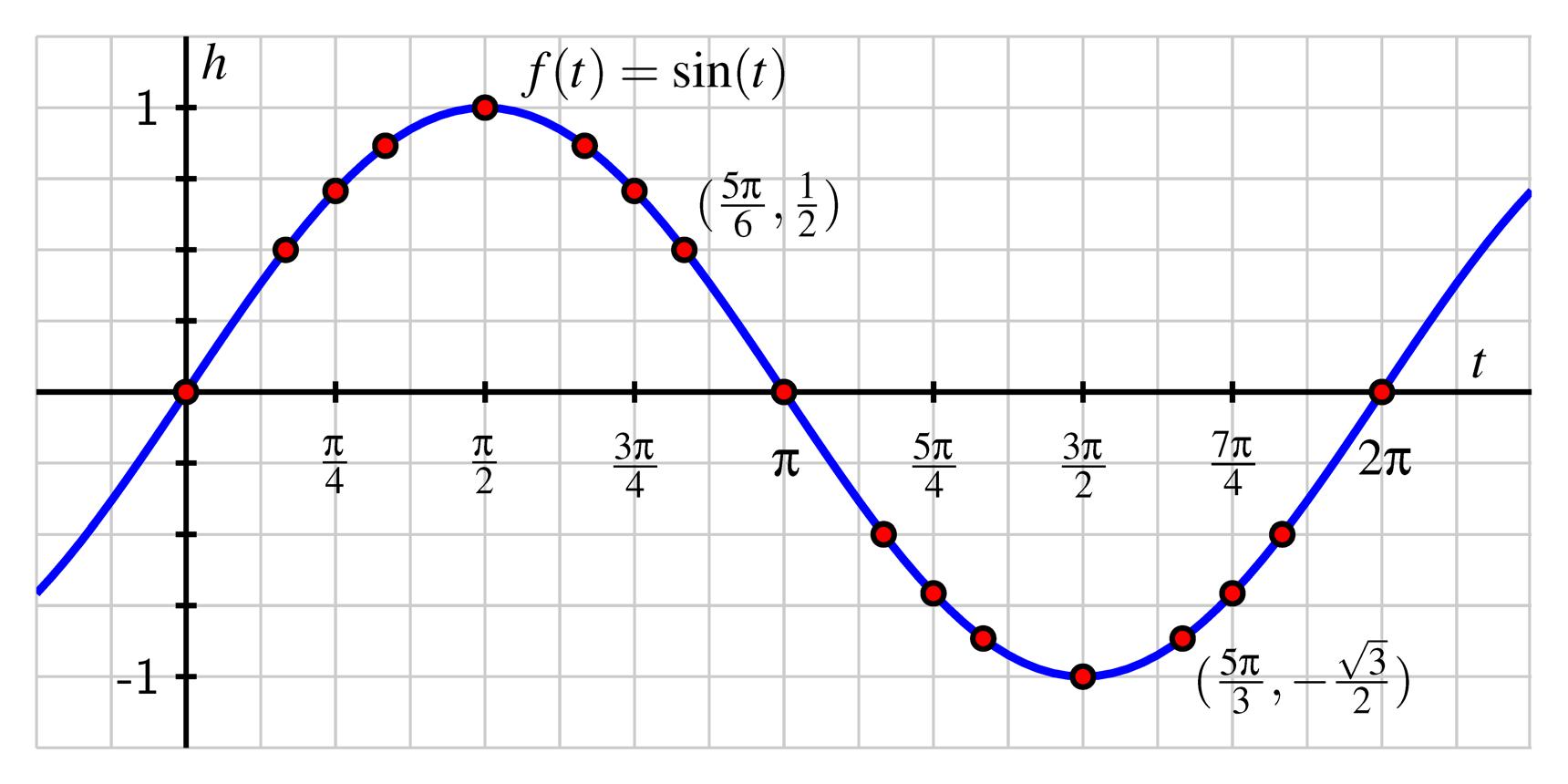
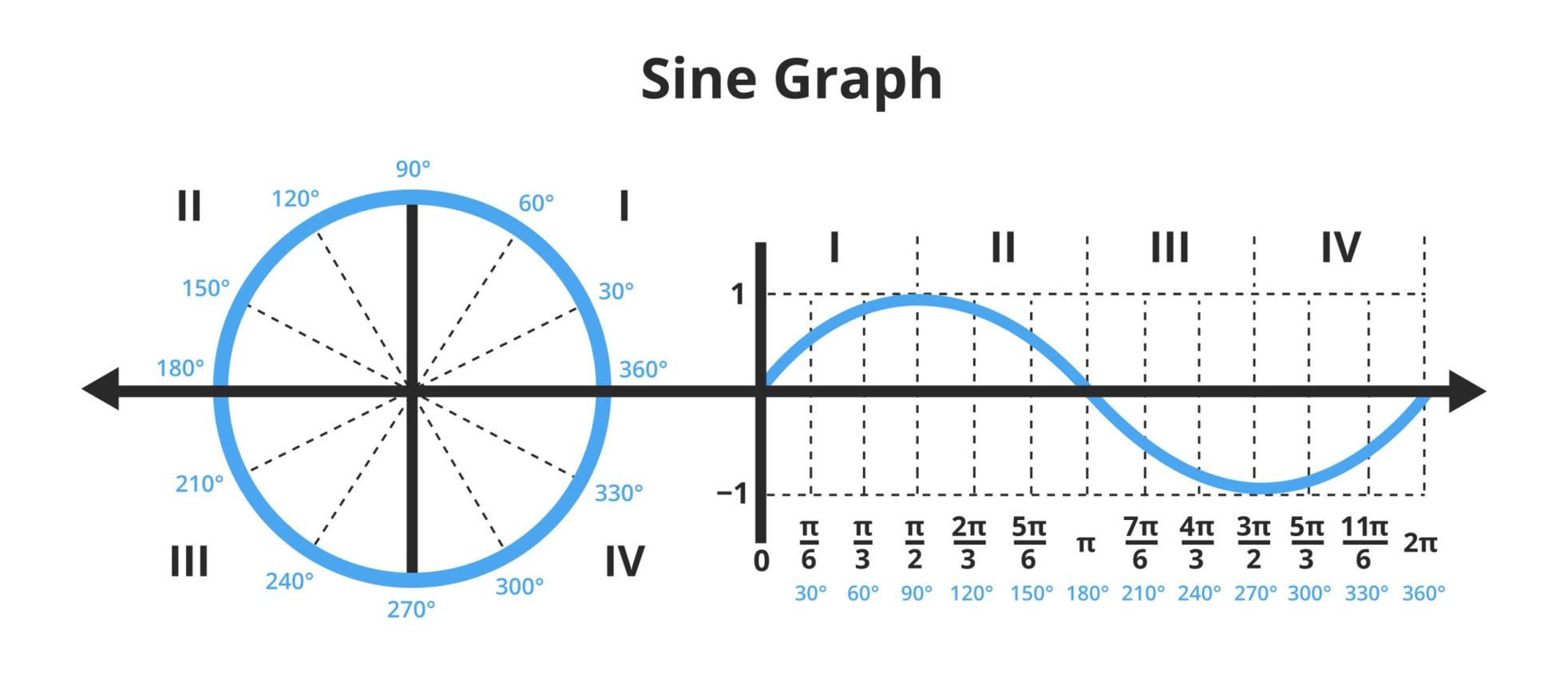
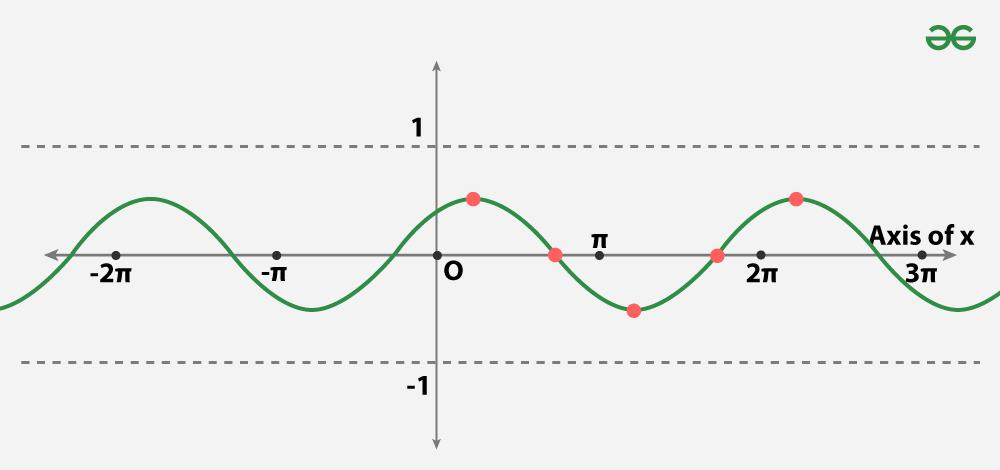
✅ Key Points:
- sin 0 = 0
- sin (π/2) = 1
- sin π = 0
- sin (3π/2) = -1
- sin 2π = 0
📌 Important Features:
- Range: [-1, 1]
- Period: 2π
- Wave starts from origin
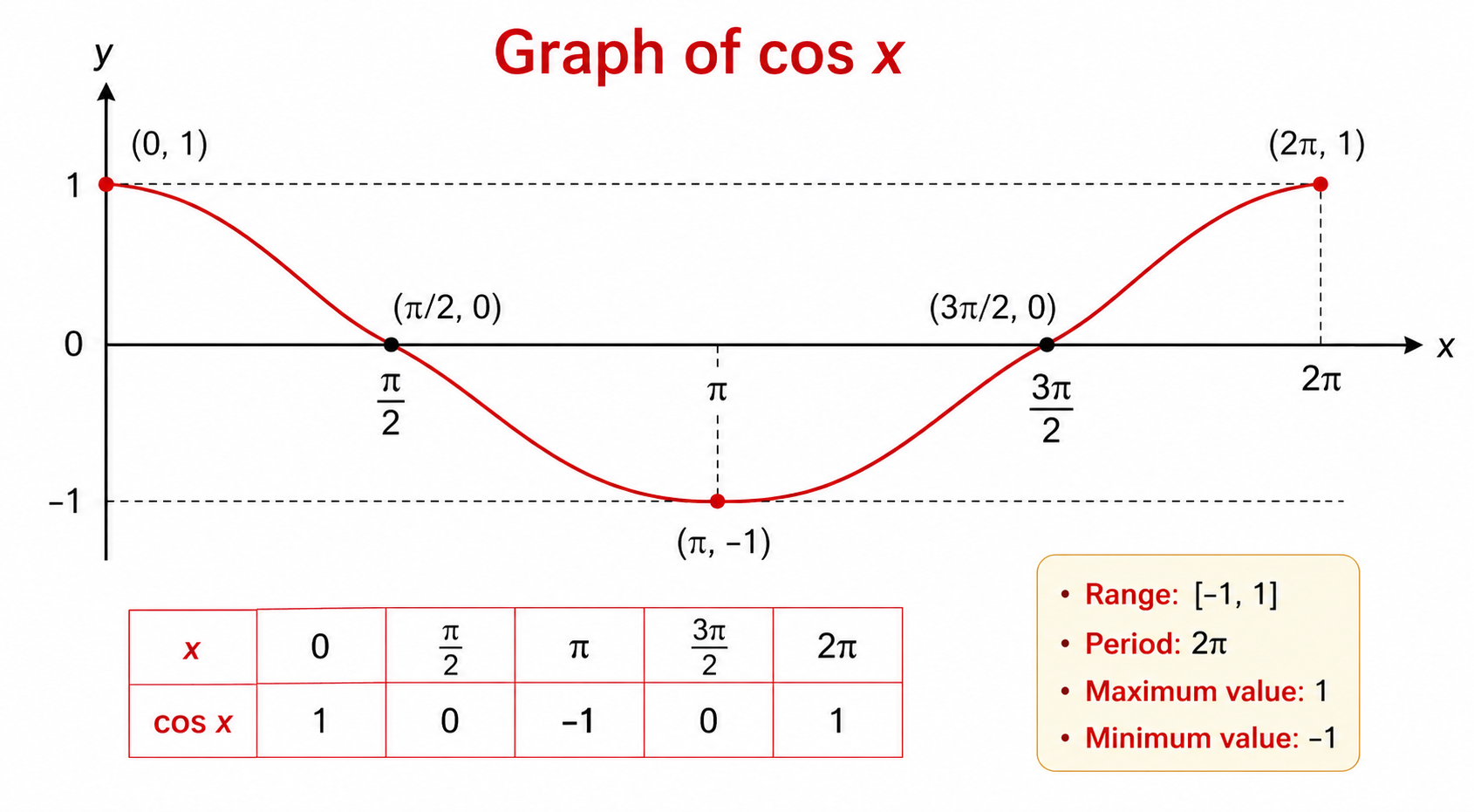
🔴 Graph of cos x
🟢 Graph of tan x
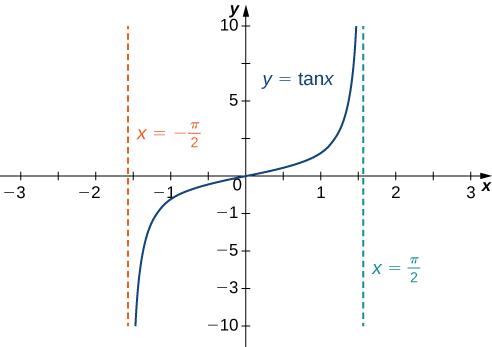
🟢 Key Points (tan x)
- tan 0 = 0
- tan (π/4) = 1
- tan (-π/4) = -1
📌 Important Features
- Range: (-∞, +∞)
- Period: π
- Undefined at:
- x = π/2
- x = 3π/2
- … (odd multiples of π/2)
If you need tuition,see the details given below-
Home Tuition in Delhi & NOIDA (Class 9-12 PCMB, JEE / NEET)+Online Classes
🔁 6. Trigonometric Identities (Class 11)
In Trigonometric Functions Class 11, identities are equations that are true for all values of θ (where defined).
📌 1. Reciprocal Identities
- sin θ = 1 / cosec θ
- cos θ = 1 / sec θ
- tan θ = 1 / cot θ
- cosec θ = 1 / sin θ
- sec θ = 1 / cos θ
- cot θ = 1 / tan θ
📌 2. Quotient Identities
- tan θ = sin θ / cos θ
- cot θ = cos θ / sin θ
📌 3. Pythagorean Identities
- sin²θ + cos²θ = 1
- 1 + tan²θ = sec²θ
- 1 + cot²θ = cosec²θ
📌 4. Trigonometric Identities (Derived Forms)
- 1 − sin²θ = cos²θ
- 1 − cos²θ = sin²θ
- sec²θ − 1 = tan²θ
- cosec²θ − 1 = cot²θ
📌 5. Allied Angle Identities
- sin (90° − θ) = cos θ
- cos (90° − θ) = sin θ
- tan (90° − θ) = cot θ
- cot (90° − θ) = tan θ
- sec (90° − θ) = cosec θ
- cosec (90° − θ) = sec θ
📌 6. Negative Angle Identities
- sin (−θ) = −sin θ
- cos (−θ) = cos θ
- tan (−θ) = −tan θ
- cosec (−θ) = −cosec θ
- sec (−θ) = sec θ
- cot (−θ) = −cot θ
📌 7. Periodicity Identities
📌 Trigonometric Identities (All Quadrants)
These identities help determine the values of trigonometric functions in different quadrants using reference angles.
🔄 Quadrant-wise Identities Table
| Quadrant | Angle Form | sin | cos | tan |
|---|---|---|---|---|
| 1st Quadrant | θ | sin θ | cos θ | tan θ |
| 2nd Quadrant | (π − θ) | sin θ | −cos θ | −tan θ |
| 3rd Quadrant | (π + θ) | −sin θ | −cos θ | tan θ |
| 4th Quadrant | (2π − θ) | −sin θ | cos θ | −tan θ |
📌 Complete Identities (All Functions)
| Angle | sin | cos | tan | cosec | sec | cot |
|---|---|---|---|---|---|---|
| π − θ | sin θ | −cos θ | −tan θ | cosec θ | −sec θ | −cot θ |
| π + θ | −sin θ | −cos θ | tan θ | −cosec θ | −sec θ | cot θ |
| 2π − θ | −sin θ | cos θ | −tan θ | −cosec θ | sec θ | −cot θ |
📌 Quadrant Formulae (90° ± θ, 270° ± θ)
🔴 (90° + θ)
| Function | Result |
|---|---|
| sin (90° + θ) | cos θ |
| cos (90° + θ) | −sin θ |
| tan (90° + θ) | −cot θ |
| cot (90° + θ) | −tan θ |
| sec (90° + θ) | −cosec θ |
| cosec (90° + θ) | sec θ |
🔵 (270° − θ)
| Function | Result |
|---|---|
| sin (270° − θ) | −cos θ |
| cos (270° − θ) | −sin θ |
| tan (270° − θ) | cot θ |
| cot (270° − θ) | tan θ |
| sec (270° − θ) | −cosec θ |
| cosec (270° − θ) | −sec θ |
🟢 (270° + θ)
| Function | Result |
|---|---|
| sin (270° + θ) | −cos θ |
| cos (270° + θ) | sin θ |
| tan (270° + θ) | −cot θ |
| cot (270° + θ) | −tan θ |
| sec (270° + θ) | cosec θ |
| cosec (270° + θ) | −sec θ |
90° ± θ → sin ↔ cos (co-function change)
270° ± θ → use reference angle + sign from quadrant
📌 Quadrant Formulae (π Form)
🔴 (π/2 + θ)
| Function | Result |
|---|---|
| sin (π/2 + θ) | cos θ |
| cos (π/2 + θ) | −sin θ |
| tan (π/2 + θ) | −cot θ |
| cot (π/2 + θ) | −tan θ |
| sec (π/2 + θ) | −cosec θ |
| cosec (π/2 + θ) | sec θ |
🔵 (3π/2 − θ)
| Function | Result |
|---|---|
| sin (3π/2 − θ) | −cos θ |
| cos (3π/2 − θ) | −sin θ |
| tan (3π/2 − θ) | cot θ |
| cot (3π/2 − θ) | tan θ |
| sec (3π/2 − θ) | −cosec θ |
| cosec (3π/2 − θ) | −sec θ |
🟢 (3π/2 + θ)
| Function | Result |
|---|---|
| sin (3π/2 + θ) | −cos θ |
| cos (3π/2 + θ) | sin θ |
| tan (3π/2 + θ) | −cot θ |
| cot (3π/2 + θ) | −tan θ |
| sec (3π/2 + θ) | cosec θ |
| cosec (3π/2 + θ) | −sec θ |
π/2 ± θ → sin ↔ cos (co-function change)
3π/2 ± θ → use reference angle + ASTC rule
A → All positive (1st quadrant)
S → Sine positive (2nd quadrant)
T → Tangent positive (3rd quadrant)
C → Cosine positive (4th quadrant)
Note-
Sign Rule (positive / negative) holds good for the reciprocal trigonometric functions also.
➕ Sum of Angles Formulae
In Trigonometric Functions Class 11, sum of angles identities are used to find values of trigonometric functions when angles are added.
📌 Basic Sum Formulae
- sin (A + B) = sin A cos B + cos A sin B
- cos (A + B) = cos A cos B − sin A sin B
- tan (A + B) = (tan A + tan B) / (1 − tan A tan B)
- cot (A + B) = (cot A cot B − 1) / (cot A + cot B)
📌 Important Observations
- sin uses + sign in between
- cos uses − sign in between
- tan formula is in fraction form
📌 Special Cases
| Expression | Result |
|---|---|
| sin (A + 90°) | cos A |
| cos (A + 90°) | −sin A |
| tan (A + 90°) | −cot A |
📌 Quick Trick
sin → +
cos → −
tan → fraction formula
➖ Difference of Angles Formulae
In Trigonometric Functions Class 11, difference of angles identities are used to evaluate trigonometric functions when angles are subtracted.
📌 Basic Difference Formulae
- sin (A − B) = sin A cos B − cos A sin B
- cos (A − B) = cos A cos B + sin A sin B
- tan (A − B) = (tan A − tan B) / (1 + tan A tan B)
- cot (A − B) = (cot A cot B + 1) / (cot B − cot A)
📌 Important Observations
- sin uses − sign in between
- cos uses + sign in between
- tan and cot are in fraction form
📌 Special Cases
| Expression | Result |
|---|---|
| sin (A − 90°) | −cos A |
| cos (A − 90°) | sin A |
| tan (A − 90°) | −cot A |
| cot (A − 90°) | −tan A |
sin → minus
cos → plus
tan → (− / +)
cot → (+ / −)
➕ Sum of Trigonometric Ratios (T.R.s)
These identities help to convert the sum of sine and cosine into a single trigonometric function.
🔁 Sum to Product Formulae (sin A + sin B Type)
These identities convert the sum or difference of trigonometric functions into a product form.
📌 Sine Formulas
- sin A + sin B = 2 sin((A + B)/2) cos((A − B)/2)
- sin A − sin B = 2 cos((A + B)/2) sin((A − B)/2)
📌 Cosine Formulas
- cos A + cos B = 2 cos((A + B)/2) cos((A − B)/2)
- cos A − cos B = −2 sin((A + B)/2) sin((A − B)/2)
📌 Quick Pattern (Very Important)
👉 sin − sin → cos × sin
👉 cos + cos → cos × cos
👉 cos − cos → − sin × sin
📌 Example
sin 70° + sin 50°
= 2 sin( (70 + 50)/2 ) cos( (70 − 50)/2 )
= 2 sin(60°) cos(10°)
📌 Standard Forms
- a sin x + b cos x = R sin (x + α)
- a cos x + b sin x = R cos (x − α)
where:
- R = √(a² + b²)
- tan α = b / a
📌 Special Case
- sin x + cos x = √2 sin (x + π/4)
- sin x + cos x = √2 cos (x − π/4)
📌 Important Observations
- Any expression of form a sin x + b cos x can be written as a single sine or cosine
- This is useful in maximum/minimum value problems
R = √(a² + b²) and tan α = b/a
🔁 Double Angle Formulae
In Trigonometric Functions Class 11, double angle formulas are used to express trigonometric functions of 2A in terms of A.
🔴 sin 2A
- sin 2A = 2 sin A cos A
- sin 2A = (2 tan A) / (1 + tan²A)
🔵 cos 2A
- cos 2A = cos²A − sin²A
- cos 2A = 2cos²A − 1
- cos 2A = 1 − 2sin²A
- cos 2A = (1 − tan²A) / (1 + tan²A)
🟢 tan 2A
- tan 2A = (2 tan A) / (1 − tan²A)
🟣 cot 2A
- cot 2A = (cot²A − 1) / (2 cot A)
sin 2A → depends on sin & cos OR tan
cos 2A → multiple forms (MOST IMPORTANT)
tan 2A → fraction formula (very common in exams)
📌 Special Values
| Angle (A) | sin 2A | cos 2A | tan 2A |
|---|---|---|---|
| 30° | sin 60° = √3/2 | cos 60° = 1/2 | tan 60° = √3 |
| 45° | sin 90° = 1 | cos 90° = 0 | tan 90° = Not Defined |
sin 2A → 2 sin A cos A
cos 2A → 3 forms (most important)
tan 2A → fraction formula
📌 Half Angle Formulae
🔴 Forms of sin A (Using Half Angle)
| Formula |
|---|
| sin A = 2 sin(A/2) cos(A/2) |
| sin A = (2 tan(A/2)) / (1 + tan²(A/2)) |
🔵 Forms of cos A (Using Half Angle)
| Formula |
|---|
| cos A = 2cos²(A/2) − 1 |
| cos A = 1 − 2sin²(A/2) |
| cos A = (1 − tan²(A/2)) / (1 + tan²(A/2)) |
🟢 Forms of tan A (Using Half Angle)
| Formula |
|---|
| tan A = (2 tan(A/2)) / (1 − tan²(A/2)) |
| tan A = (2 sin(A/2) cos(A/2)) / (cos²(A/2) − sin²(A/2)) |
🔴 sin 3A
| Formula |
|---|
| sin 3A = 3 sin A − 4 sin³A |
| sin 3A = 4 sin A cos²A − sin A |
🔵 cos 3A
| Formula |
|---|
| cos 3A = 4cos³A − 3cos A |
| cos 3A = cos A (4cos²A − 3) |
🟢 tan 3A
| Formula |
|---|
| tan 3A = (3tan A − tan³A) / (1 − 3tan²A) |
🔥 Quick Trick (Important)
- sin 3A → 3s − 4s³
- cos 3A → 4c³ − 3c
- tan 3A → (3t − t³) / (1 − 3t²)
In conclusion, mastering trigonometric functions class 11 is essential for building a strong foundation in mathematics.
For authentic theory and examples, refer to the
NCERT Class 11 Maths Chapter – Trigonometric Functions
You can check the latest syllabus from the
CBSE Official Curriculum Website